Threats to Sea Lampreys
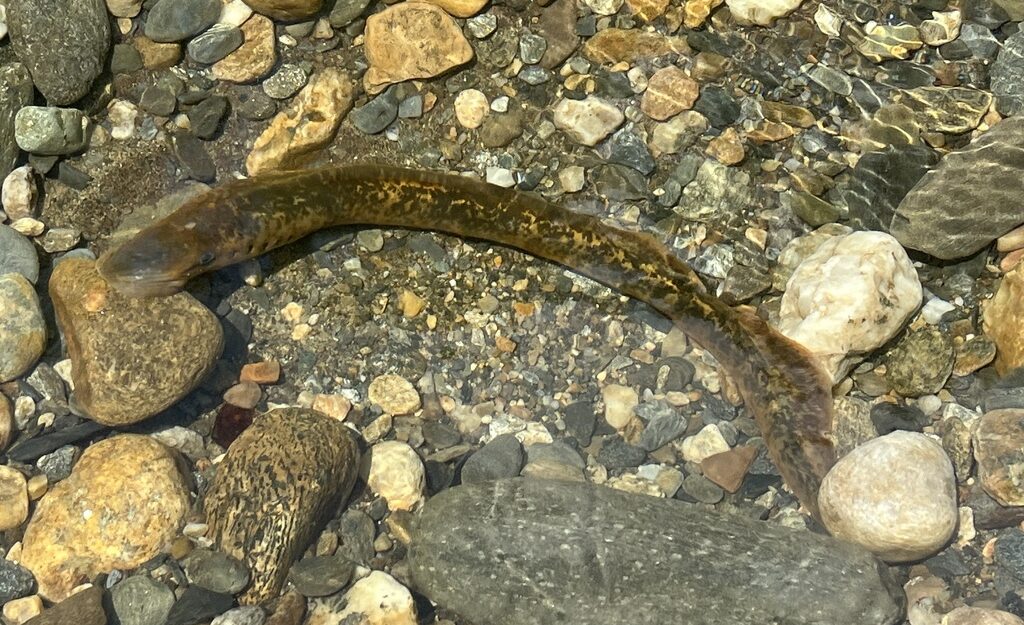
Have you ever been to a river access on the Connecticut River Basin and seen a sign saying “Do Not Disturb Spawning Sea Lamprey?” This was meant to protect lampreys that are very sensitive during spawning in spring and early summer (typically May-June). Since sea lampreys spawn only once in their lifetime—right before dying—they are extremely vulnerable during this final stage of their life cycle. There are several human-caused threats reducing their chances of survival.
Barriers to migration
- Dams prevent sea lamprey from reaching suitable spawning habitat.
Nesting disturbance
- Moving rocks or walking through spawning areas (usually in tributaries of the Connecticut River) can destroy nests and disrupt reproduction.
Habitat degradation
- Sedimentation, pollution, and altered stream channels reduce the quality of spawning and nursery habitat.
Climate change
- More frequent droughts and warmer water temperatures are making rivers shallower and less suitable for migration and reproduction.
- Low water levels and warmer temperatures can interfere with adults, causing them to miss their environmental cues to begin their upstream migration.
- Larval lampreys (ammocoetes) spend the first several years buried in river sediment and are vulnerable to streams running too warm or dry.
Reduced spawning success
- Because adults spawn only once before they die, any disturbance during this final stage can have lasting effects on the population.
Recent dam removal success
- Old dams block fish access for spawning, often concentrating the nests in limited suitable habitats, which can reduce the survival of incubating eggs. Two years ago, in August 2024, one of these barriers was removed.
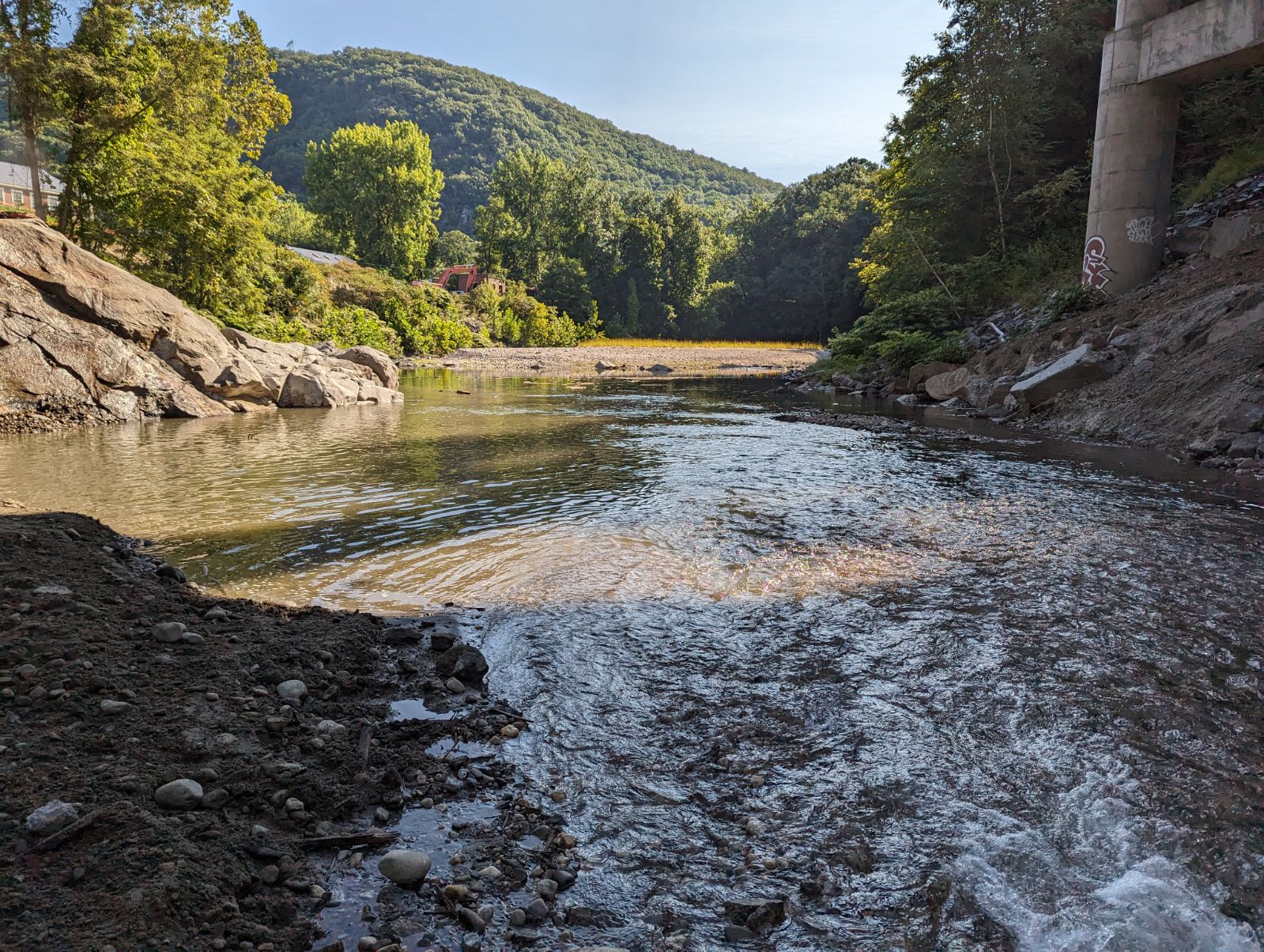
The old Blake Higgins Dam, dating as far back as 1838, was removed from the Saxtons River, a tributary of the Connecticut River. Over a mile of upstream spawning habitat was restored, allowing sea lamprey to spread out and spawn above the dam.
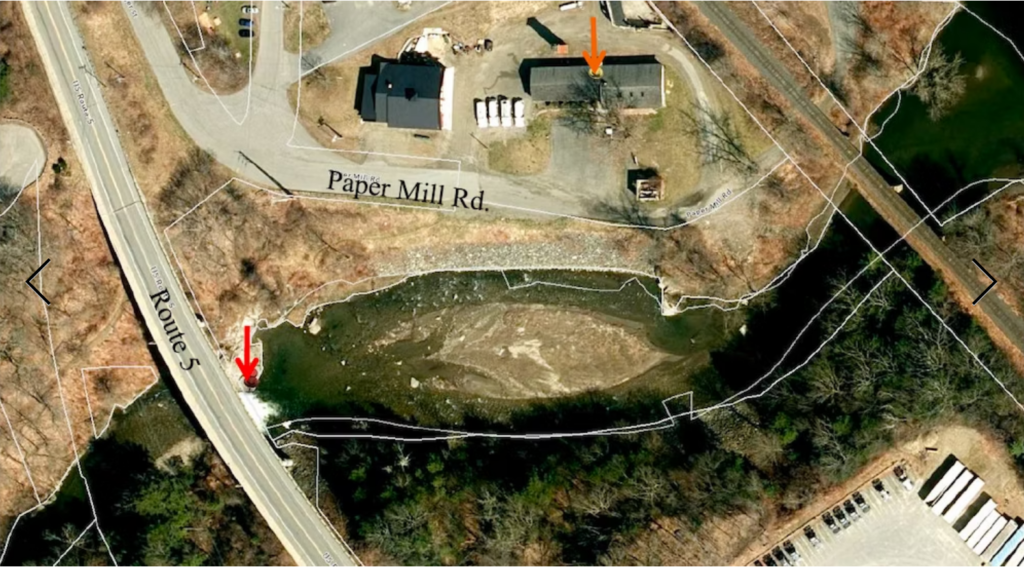
Vermont Parcel Program Map – red arrow points to dam location, orange arrow points to Blake & Higgins mill
Then, in a matter of weeks, Vermont River Conservancy became the landowner, assisted with dam removal, added a riverfront path, stone steps down to the river, and a parking area, and worked with Connecticut River Conservancy to plant trees! Once the site of a broken dam, now a free-flowing spot for great swimming access and spawning grounds. For the first time in over 150 years, sea lamprey can move from the Connecticut River up the Saxtons River.
The Saxtons River has the perfect gravel size in its streambed for sea lamprey to build nests and spawn. This year marks the second year of quality upstream spawning access for sea lamprey on the Saxtons River.
Protecting Sea Lamprey
How do we show sea lampreys some love? Now that you’ve fallen in love with these guys, here are some ways to keep these fellas safe.
Keep your distance
They are tired and stressed enough from navigating altered ecosystems to spawn. Let them do their thing and observe them respectfully.
Leave river rocks where you found them
While they might just look like rocks to you, some have been strategically placed by a sea lamprey in its final moments of life to ensure the safety of its young. Sea lampreys are not the only fish to follow this practice; many fish species do! Help keep rocks in their place in the river to help protect spawning fish.
No rock dams!
While these structures are made with kind intentions, they have consequences for the life of the stream. Small hand-built rock dams disturb sea lamprey nesting.
Spread the word
Next time you hear someone bad-mouthing their funky vampiric mouth, share how crucial they are for freshwater ecosystems—and remind them they’re basically living dinosaurs.
Support the removal of old dams
When we talk about dam removal, we are referring to old dam structures that no longer serve a purpose and impede rivers, fish habitat, and people’s ability to recreate on rivers.
Learn more about dam removal.
Prevent the spread of aquatic invasive species (AIS)
Clean, drain, and dry boats after every launch before entering your next waterbody.
Even if you can’t see it with your eyes, you might be transporting an aquatic invasive species.
To help freshwater ecosystems continue supporting native species, follow the steps above to stop the spread. For more information on AIS spread prevention and management, check out Aquatic Invasive Species Part 2: How to manage them.