Interviewees: Hayley Kolding
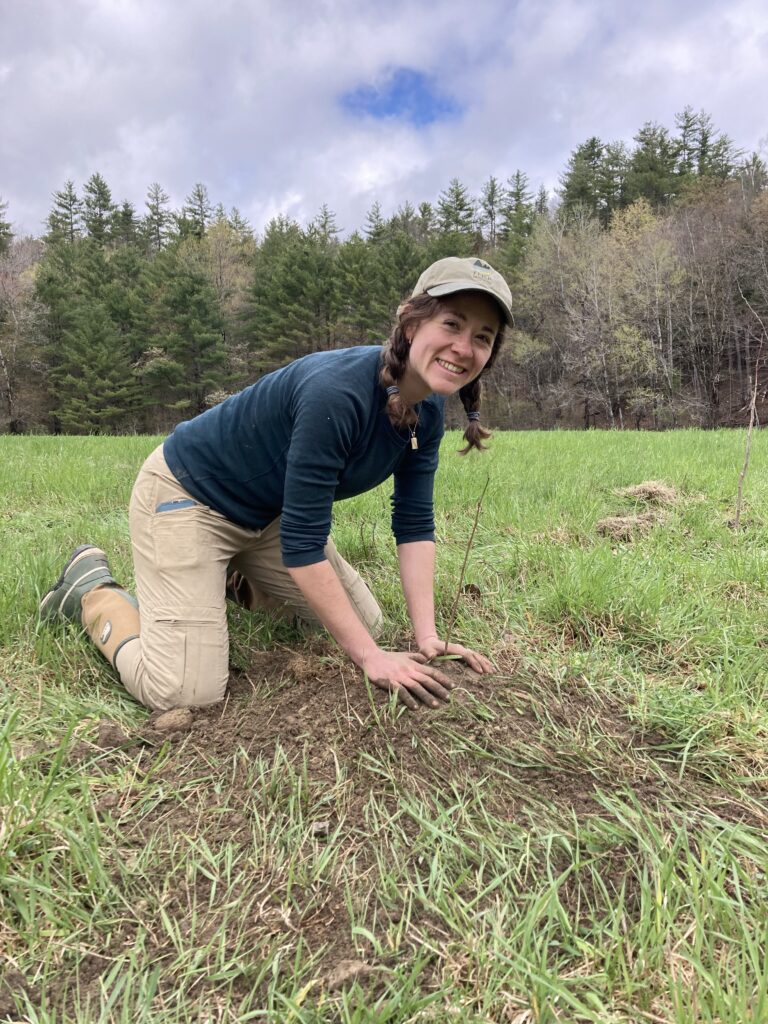
Hayley planting a tree in Southern VT.
Growing up, Hayley was always fascinated by the living world. She loved looking for frogs in the pond and playing explorer in the woods, where the headwaters of a familiar brook drew her “uphill and upstream like a magnet.” An English major in college, she continually sought ways to learn more about the complex ecosystem webs and biodiversity of New England – a passion that eventually led her to earn a Master of Science through the Field Naturalist program at the University of Vermont. Now, Hayley serves as the Southern Vermont Conservation Manager, essentially the southern “arm” of VRC.
As Hayley (and her Northern Vermont counterpart, Remy) would tell you, the job of a Conservation Manager is fast-paced and varies all the time. Some weeks, Hayley dives deep into data, analyzing ecology, stream geomorphology, land use, and socioeconomic data to map out priority areas for new conservation and restoration projects. Some weeks are heavy on field time, from monitoring easements to planting trees to walking rivers, floodplains, and headwater forests with landowners who want to talk through strategies to protect the land they love. A “typical” week could also involve discussing flood resilience with a town planning department or conservation commission, leading a field walk, drafting a conservation easement, or helping manage the properties that Vermont River Conservancy has conserved in southern Vermont.
It’s a lot of variety to keep up with, but one thing is constant from week to week: from Barre to Essex, from Colchester to Montpelier, the whole VRC team is part of Hayley’s work in southern Vermont. She says, “Every one of my colleagues is amazing, and it means so much to be able to pick up the phone and bounce ideas with them.”
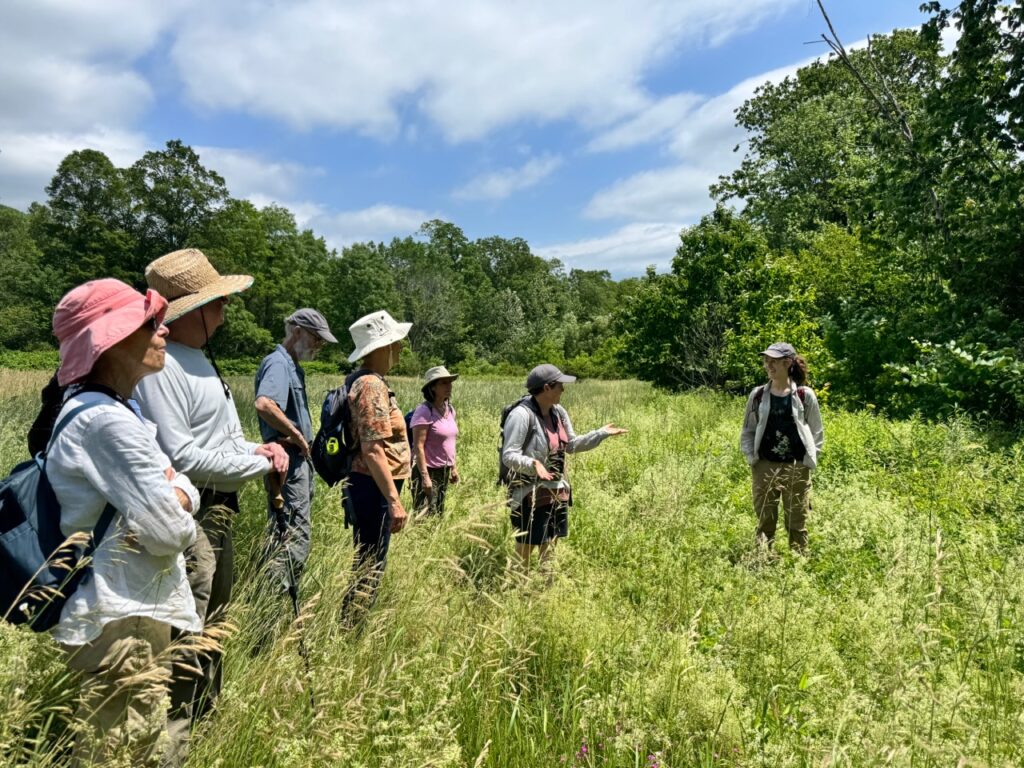
Hayley leading a river tour on the Bull Creek in Athens, VT. PC: Jill DeVito
One summer highlight was leading a river tour… in her own backyard!
In June, Hayley led a group of river conservation enthusiasts to Bull Creek.
“Conservation at the Confluence” was the driving theme, as Bull Creek flows through Sleepy Valley to a confluence with the dramatic and geomorphically sensitive Saxtons River. On either side of the valley, trails wind through rich northern hardwood forest, hemlock forest, and drier summit communities with hickory and oak.
On this walking tour, ecologists and neighbors from Vermont River Conservancy, the Windmill Hill Pinnacle Association, and Bull Creek Common Lands geeked out about native plants and birds. As they trekked onwards, Hayley noted that people would point out nature observations (Look, it’s an American chestnut! Are these toad eggs?) and describe similar river structures they’ve seen in other towns or states they’ve called home. Not only is this format of shared discovery and open discussion fun, but Hayley finds that it allows for powerful education exchange, new engagement ideas, and coalition building across individuals and organizations in southern Vermont.
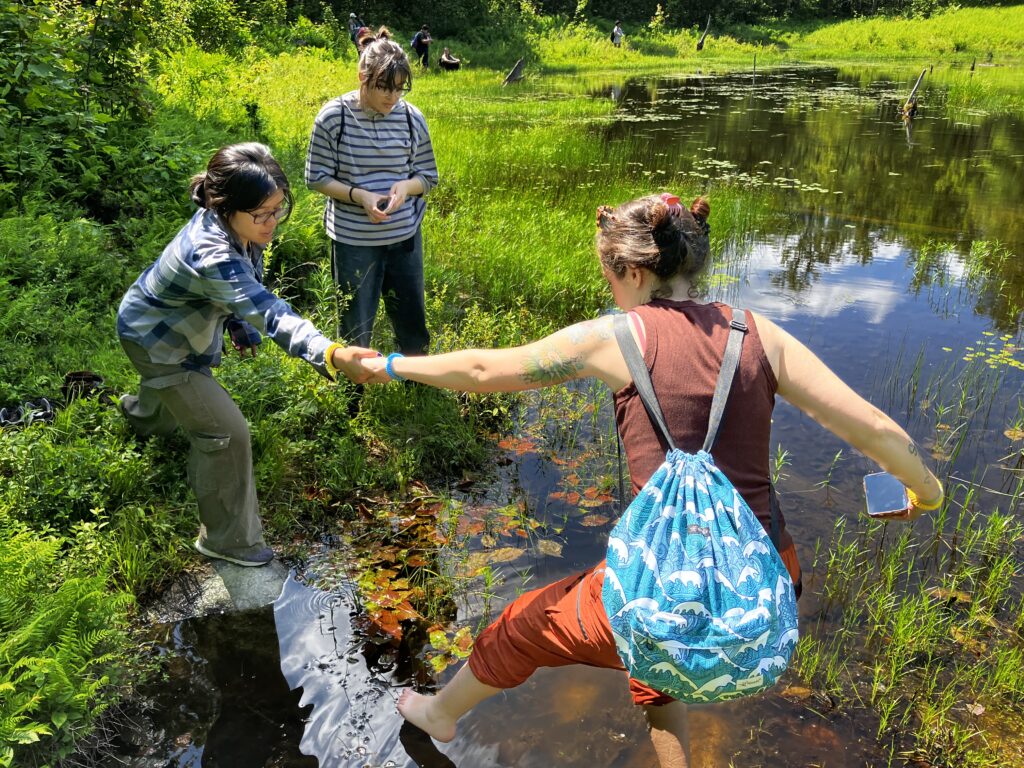
Environmental science students in the Pathways Program visiting Old Oak Headwaters Preserve in Marlboro.
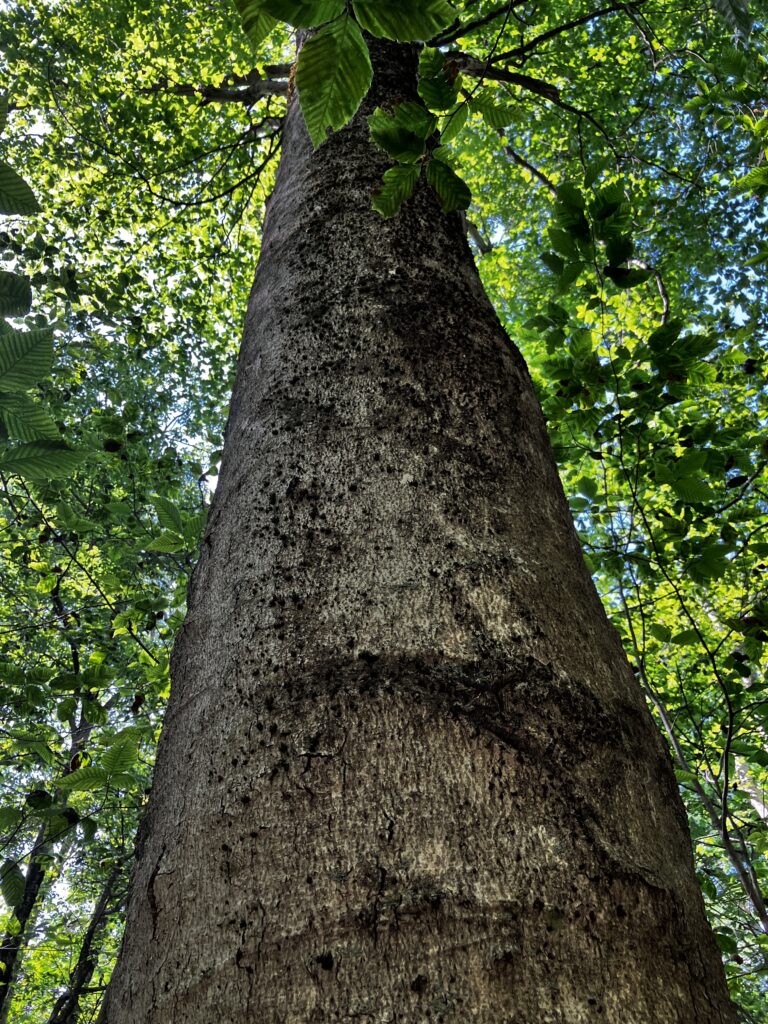
American Beech Tree.
On one of her days off later that month, Hayley went to Old Oak Headwaters Preserve in Marlboro to lead a field day for environmental science students in the Pathways Program. The fourteen students who participated this year, all from Citrus College and Cal Poly Pomona in Southern California, traveled to Southern Vermont to learn about environmental science careers and some current approaches to environmental challenges.
The 197-acre preserve, which VRC helped conserve last year, is a perfect outdoor classroom where you can see 100- to 200-year-old trees, including Red Oak, Yellow Birch, and Black Cherry. Because the site hasn’t been logged since the widespread clear-cutting that happened in the 1800s, these old trees carry especially rich life histories. Hayley and the Pathways students explored how headwater forests act like sponges in an upper watershed. With the help of beaver wetlands, swamps, and the old-growth trees and their well-developed roots, they soak up rain and prevent erosion, essential for animal and insect habitats in riparian ecosystems and flood resilience, clean water, and cooler temperatures downstream. After a long day of fieldwork, one student said, “…being out in the field with the mentors one by one in their respective fields was enjoyable and encouraging, especially for students who…have an interest and love for the field and forest.”
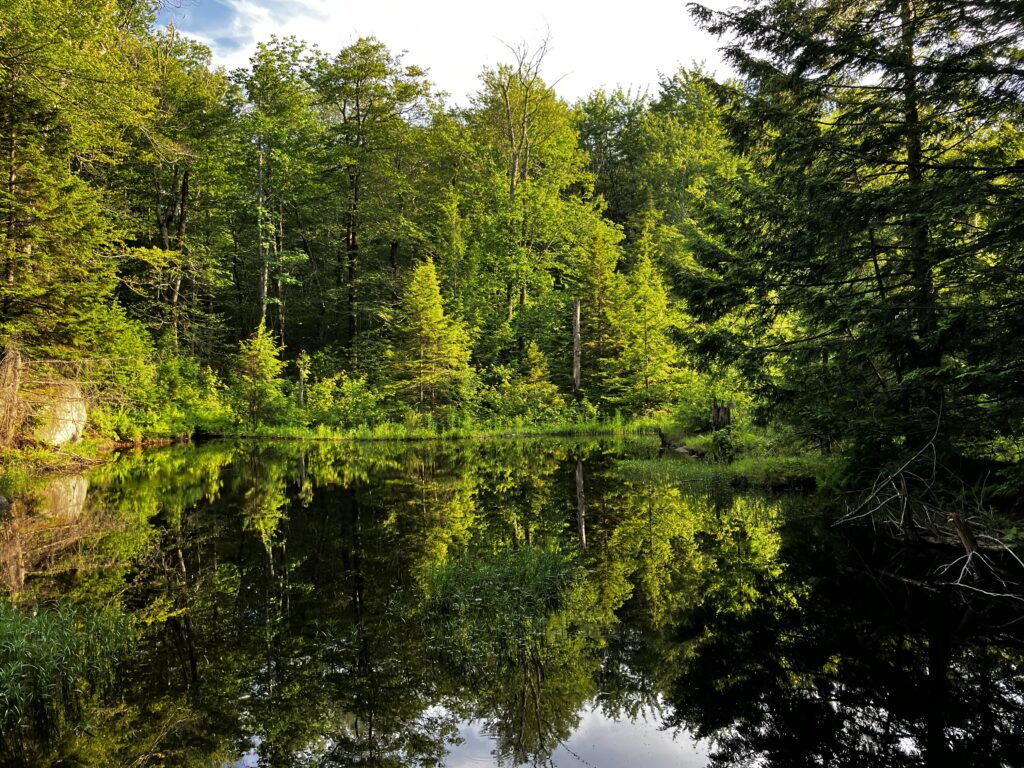
Old Oaks Headwater Preserve beaver pond.
Examples of reciprocity are prevalent throughout Hayley’s work with VRC. She is enamored by how complex yet regenerative our river ecosystems are – when we take care to understand, protect, and restore them, they take care of us, too. As Hayley embarks on her fourth year with VRC, she is feeling as committed as ever to working with local communities to conserve and steward the riverlands that sustain us.
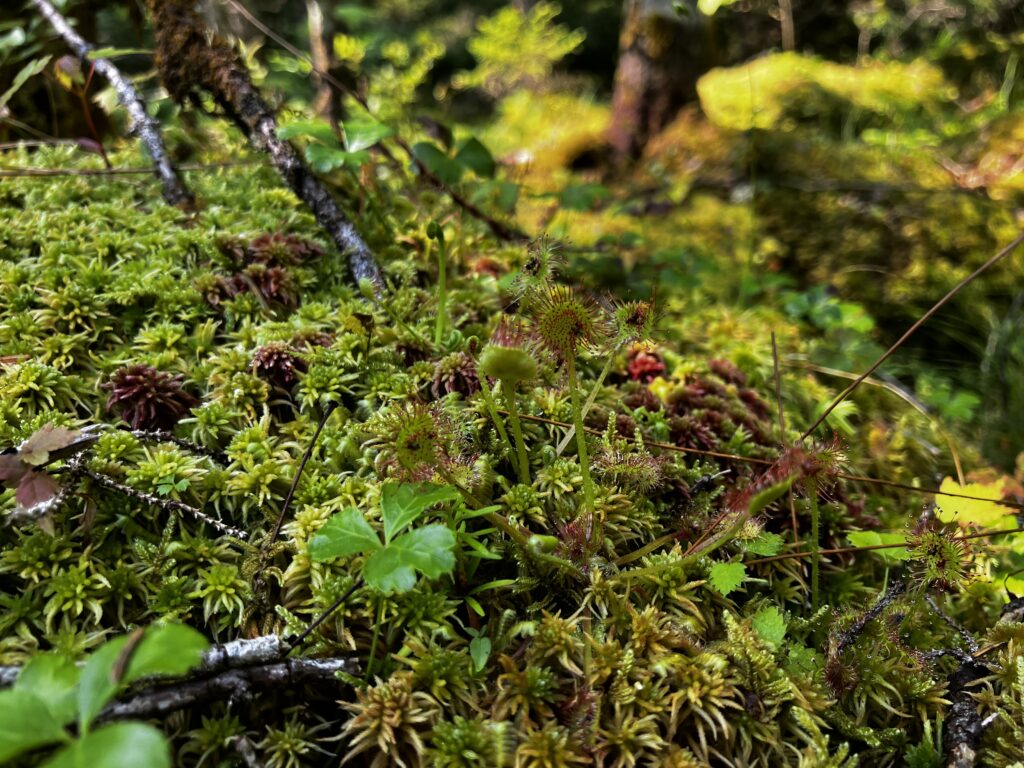
Round Leaved Sundew.