
Across the world, more than 1,500 species of bats flit across the night sky, weaving elegantly through the darkness as they use echolocation to hunt their next meal. As the only mammals capable of true flight, bats are remarkable creatures that can live for decades, navigating forests, fields, and wetlands under the cover of night. Though often overlooked or misunderstood, these nocturnal animals play an important role in maintaining healthy ecosystems.
Bats of Vermont
Vermont is home to nine species of bats that live in its forests, caves, and wetlands for all or part of the year. These species fall into two categories based on how they spend the winter: migratory bats and cave-dwelling bats. Three species migrate south for the winter, while six hibernate in caves and mines.
The three migratory species, the Hoary bat, Eastern red bat, and Silver-haired bat, leave Vermont as temperatures drop and food becomes scarce, traveling south to find suitable winter habitat. These bats feed on a variety of flying insects, including mosquitoes, moths, beetles, flies, and wasps. During the spring, summer, and early fall, they help regulate insect populations throughout Vermont before embarking on their seasonal journeys. Depending on the species and conditions, these bats can travel at speeds of 11 to 21 miles per hour, migrating to the southeastern United States and as far as Mexico.
Cave-dwelling bats, by contrast, generally remain in Vermont throughout the year. The state’s six species are the Big brown bat, Little brown bat, Indiana bat, Tri-colored bat, Northern long-eared bat, and Eastern small-footed bat. As winter approaches and insects become scarce, these bats seek out a hibernaculum, a protected place where they can hibernate through the cold months. Hibernacula may include natural caves, abandoned mines, and other suitable structures where temperatures and humidity help bats conserve energy until spring. Some species may even use human-made structures like barns and attics!
The Seasonal Lives of Bats
Throughout the year, bats depend on different habitats to meet their needs. Four important resources are roosting sites, foraging areas, maternity colony habitat, and winter hibernacula or migratory stopover sites. Forests, wetlands, and the surrounding landscape can provide many of these essential resources, helping bats survive and raise their young through the changing seasons.
Spring: Returning and Raising Young
Springtime is a busy time for bats. Some are emerging from hibernation, while others are returning from their winter migrations. As temperatures rise and insects become abundant, bats seek roosting sites where they can rest, recover, and prepare to raise their young.
Roosting sites may include spaces under loose bark, tree cavities, snags, rock crevices, or human-made structures like barns and attics. Depending on the species, females gather in these roosts to form maternity colonies, while males often roost alone or in small bachelor groups.
Within the maternity colonies, each female gives birth to one pup. In species that form larger colonies, the females help one another by babysitting pups while others forage, huddling together to maintain heat, and even mentoring first-time mothers. They also vocalize to warn of nearby predators, and they swarm out of the roost in large numbers when emerging to forage, which helps confuse predators. These sheltered, communal spaces are essential for raising young until they can fly and forage independently.
Summer: Growing and Learning
During the summer, bat pups grow quickly. Within several weeks, they develop fur, open their eyes, and begin learning to fly and forage for insects. While young bats initially depend on their mothers for milk, they gradually develop the skills needed to hunt independently.
Adult bats continue to forage at night, feeding on insects before returning to their roosts. Wetlands can be especially valuable feeding areas because they support diverse insect populations. Wetland edges, open water, and nearby forests may provide bats with important places to hunt while their pups grow.
By late summer, young bats are generally becoming independent and preparing for the seasonal changes ahead.
Fall: Preparing for Winter
As temperatures cool and insects become less abundant, bats enter a critical period of preparation. Migratory species begin traveling toward warmer regions, while hibernating species increase their food intake to build the fat reserves they need to survive winter.
Bats need plenty of calories for migration or hibernation. A single bat can eat 30 to 45 percent of its body weight in a night. For example, a single Little brown bat can consume 3,000 to 4,500 mosquito-sized insects per night! This appetite makes bats valuable predators of insects and helps keep insect populations in check.
Fall is also an important time for mating and for locating suitable winter habitat. Many cave-dwelling bats gather at hibernacula, where mating may occur. In many species, fertilization is delayed until spring, allowing females to conserve energy during winter hibernation.
Access to abundant insects during the fall is especially important for bats preparing for migration or hibernation. Healthy wetlands, forests, and other feeding habitats help provide the food they need to build these critical energy reserves.
Winter: Hibernation and Migration
Winter brings two different strategies for Vermont’s bats. Migratory species travel south to areas where temperatures and food availability are more favorable. Cave-dwelling bats remain in the region and enter hibernation in locations such as caves and abandoned mines.
During hibernation, a bat’s body temperature, heart rate, and breathing rate drop significantly, allowing it to conserve energy while relying on the fat reserves it accumulated in the fall. These reserves must last through the winter, making suitable hibernacula and successful fall foraging essential to survival.
Although bats may be less visible during the winter, the habitats they depend on throughout the year remain important. Protecting wetlands, forests, and the connections between them helps maintain the feeding areas, roosting sites, and broader landscape that bats need to thrive.
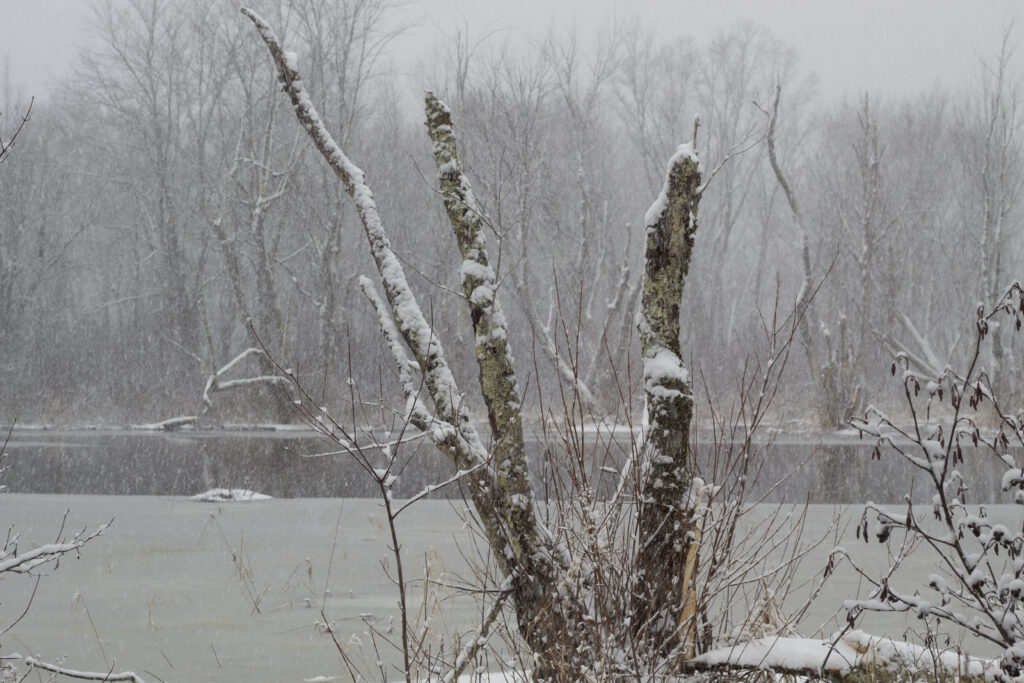
Snow-covered wetland alongside the Clyde River in the Northeast Kingdom of Vermont. PC: Gabriella Marchesani
White-Nose Syndrome: A Threat to Vermont’s Bats
Unfortunately, many of North America’s cave-dwelling bats have experienced devastating declines due to White-Nose Syndrome (WNS). Since it was first documented in 2006, the disease has killed over 5.7 million bats in the northeastern United States alone and has caused nearly 50% reductions across North America. All six of Vermont’s cave-dwelling bats are affected.
WNS is a fatal fungal disease that thrives in cool, damp environments, including the caves and mines where bats hibernate. The fungus invades and damages bats’ skin tissues, particularly on the nose, wings, and ears. It spreads easily by touch between hibernating bats when they huddle together to conserve warmth.
Infected bats may show white fungus on their noses and wings and display unusual behavior, such as waking more frequently from hibernation. These disruptions force bats to use precious energy reserves when food is scarce. As a result, many affected bats die from dehydration and starvation before spring arrives.
WNS continues to threaten bat populations. It highlights the importance of protecting hibernation sites and conserving foraging habitats (wetlands, wetland edges, forests, forest edges, and more) so that bats can build strong energy reserves.
The Importance of Bats
Despite the challenges they face, bats play an important role in keeping forests, wetlands, and other ecosystems healthy. A single bat can eat hundreds or even thousands of insects in one night, including mosquitoes, moths, beetles, and agricultural pests. By controlling insect populations, bats can help reduce crop damage and protect vegetation from excessive insect feeding. In forest and wetland ecosystems, this natural pest control helps maintain the balance between insects, plants, and other wildlife.
Bats also contribute to local food webs, serving as prey for predators such as owls and hawks. Their guano, or droppings, provides nutrients that support fungi, bacteria, and invertebrates in caves and other roosting sites. Additionally, bats travel between forests, wetlands, fields, and waterways to forage and roost, relying on a network of habitats to meet their needs.
Healthy bat populations depend on suitable roosting sites, abundant food sources, and connected habitats. When bat populations decline, these ecological relationships can be disrupted. Protecting bats and their habitats is therefore an important part of conserving biodiversity and maintaining the health and resilience of Vermont’s forests, wetlands, and surrounding landscapes. Even though we may rarely see these nocturnal mammals at work, their contributions to healthy ecosystems continue long after the sun sets.
How You Can Help Bats
Bats face many challenges, from habitat loss and White-Nose Syndrome to declining insect populations. Fortunately, there are steps we can take to help protect these important mammals and the habitats they depend on.
- Protect wetlands and natural shorelines. Wetlands provide valuable feeding areas where bats can hunt insects. Maintaining natural vegetation along wetland edges, ponds, and waterways helps support insects and provides important habitat for wildlife.
- Preserve trees and roosting sites. Mature trees, tree cavities, loose bark, and standing dead trees called snags can provide shelter for bats. When it is safe to do so, leave suitable trees standing and avoid disturbing occupied roosts, especially during the maternity season.
- Plant native species. Native trees, shrubs, and wildflowers support diverse insect populations, giving bats a reliable food source. Choosing native plants for your yard or property can help strengthen the local food web.
- Reduce pesticide use. Many bats rely on insects for food. Limiting unnecessary pesticide applications helps protect the insects bats eat and reduces their potential exposure to harmful chemicals.
- Keep bats safe from disturbance. Avoid entering or disturbing hibernation sites, such as caves and abandoned mines. Disturbing hibernating bats can cause them to use up essential energy reserves during winter. If bats are roosting in a building, seek guidance from a qualified wildlife professional before taking action.
- Help prevent the spread of White-Nose Syndrome. Follow current guidance from wildlife agencies when visiting caves, mines, and other sites where bats hibernate. Decontamination procedures and access restrictions can help reduce the risk of spreading the fungus.
- Learn about and report bat activity. Participate in local conservation programs, learn to identify Vermont’s bat species, and share observations with wildlife professionals when appropriate. Community awareness supports ongoing research and conservation efforts.
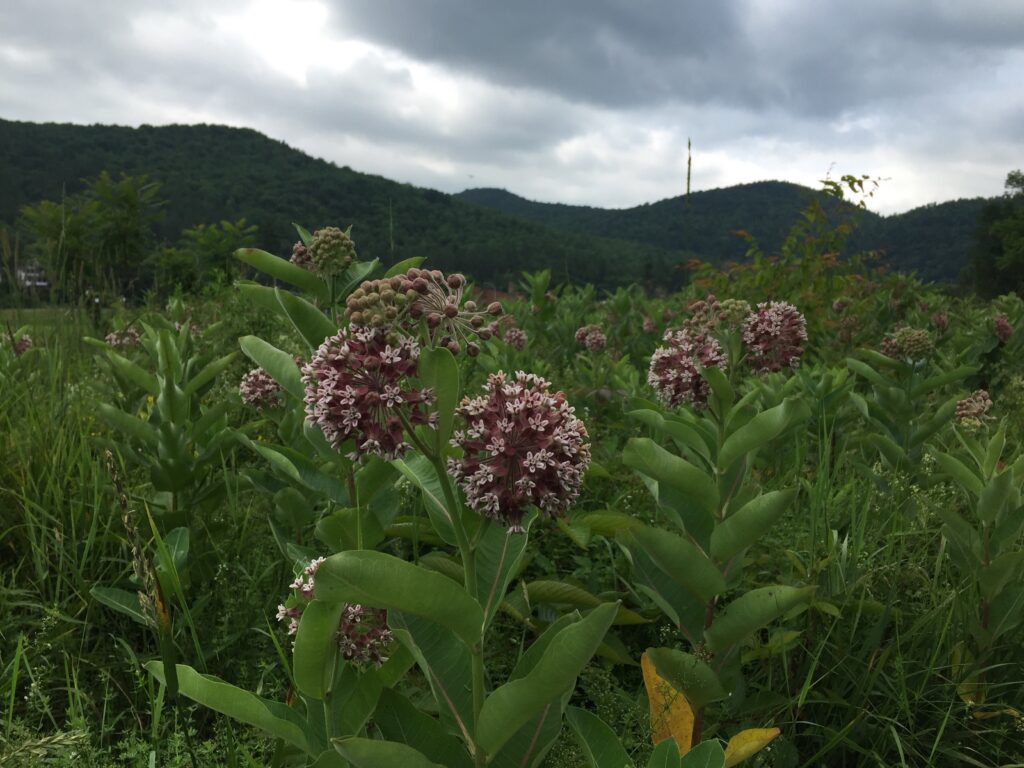
Native wildflowers bloom along the a protected river corridor easement, creating a vibrant summer wetland buffer that supports pollinators, provides habitat for bats, and helps protect the health of the river ecosystem
Every action, whether protecting a wetland, planting native vegetation, or preserving a mature tree, can help create healthier habitats for bats and other wildlife. By caring for the connected forests, wetlands, and waterways that bats depend on, we can help these remarkable mammals continue to play their important role in Vermont’s ecosystems.
Written by Sadie Preece, VHCB AmeriCorps at FrankinCountyNRCD
A similar version of this blog can be found at FrankinCountyNRCD/OurBlog.org where Sadie dives into her experience monitoring a Maternity Bat Colony as part of her AmeriCorps Independent Service Project while serving at Franklin County Natural Resources Conservation District.