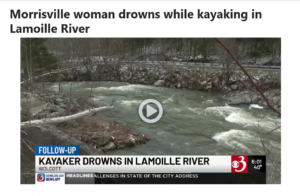
 On April 4th, the Lamoille River’s frigid, fast moving water took the life of Sarah Goldberg, a 34 year old Morrisville woman. Goldberg was paddling with her friend, who were both experienced paddlers and equipped for the conditions. Goldberg was overturned in a dangerous area with rough waters and tragically drowned in response to the cold shock. Our team at Vermont River Conservancy is heartbroken over this news, and hopes to prevent future tragedies by sharing cold water safety information.
Cold shock occurs when your body hits cold water, drastically altering breathing, heart rate, and blood pressure. Even for confident swimmers, the sudden involuntary gasp when people go underwater increases the risk of drowning. Cold water drains body heat four times faster than cold air. Unplanned immersion in cold water can be life-threatening without proper protection.
Rivers this time of year are treacherous, flooding and moving rapidly. Vermont’s April snowfalls accumulated, keeping rivers’ temperatures frigid. In near freezing snowmelt water, severe hypothermia or death can occur within 10-15 minutes. Temperature, time, and conditions determine life or death.
Key Stages of Cold Water Immersion:
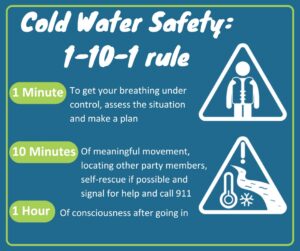
- 0–1 Minute (Cold Shock): Immediate involuntary gasp, panic, and rapid breathing. Risk of drowning.
- 1–10 Minutes (Cold Incapacitation): Hands and legs become numb, making swimming or self-rescue nearly impossible.
- 10 minutes–1 Hour(Hypothermia): Body core temperature drops, leading to unconsciousness, coma, and cardiac arrest. Getting out of the water as quickly as possible is vital for survival.
Why Spring Paddling is Dangerous:
Experienced kayakers are drawn to Vermont rivers in the spring for the consistently fast whitewater, but it’s extremely dangerous. During the spring time, the snowmelt and rainfall creates hazardous currents in rivers. These rough conditions increase the risk of falling out of a kayak, and make it harder to escape the water. Rivers’ near freezing temperature range in the mid to high 30s°F. Even if you are paddling on a warm sunny day, the water temperature can cause drownings.
Drew Clymer, the search and rescue coordinator for Vermont’s Department of Public Safety, and a Stowe Mountain Rescue trainer, said, “the effects of cold water cannot be overstated.” The same day Sarah Goldberg drowned in the Lamoille River, Clymer was cold water training in the Mad River with Stowe Mountain Rescue. His hands were frozen in less than 10 seconds in the water, even with proper gear. Cold shock and hypothermia impair reaction time, life jackets can help you stay afloat and create extra time for help to arrive, but there’s no guaranteed.
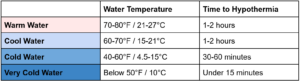
Water Temperature and Time to Hypothermia:
Safety Checklist for Spring Paddling:
- Wear a drysuit, wetsuit, or neoprene outfit to shield against icy cold water.
- Coast Guard-approved life jacket, fitted over layers.
- Base Layers: Wool layers recommended to wick moisture. Avoid cotton.
- Wear an insulated helmet meeting EN 1385 standards for cold water paddling.
- Device for contacting (eg.radio, cellphone with waterproof case)
- Check Conditions: Avoid high winds and cold, fast-moving water.
- Float Plan: Always go with a friend, and let someone know where you are both going, your route, and expected return time.
- Rescue Gear: Carry a whistle, bilge pump, and a throw rope or tow line.
Even experienced swimmers, paddlers, and boaters need cold water training to prepare for these situations. We understand how a sunny spring day can be deceiving, but the water temperature remains cold. What happened to Sarah Goldberg can happen to anyone. Take a lesson to ensure safe recreation and cold water safety, especially in spring’s dangerous conditions.