What Is Lumen Printing? A Brief History of Light, Leaves, and Silver
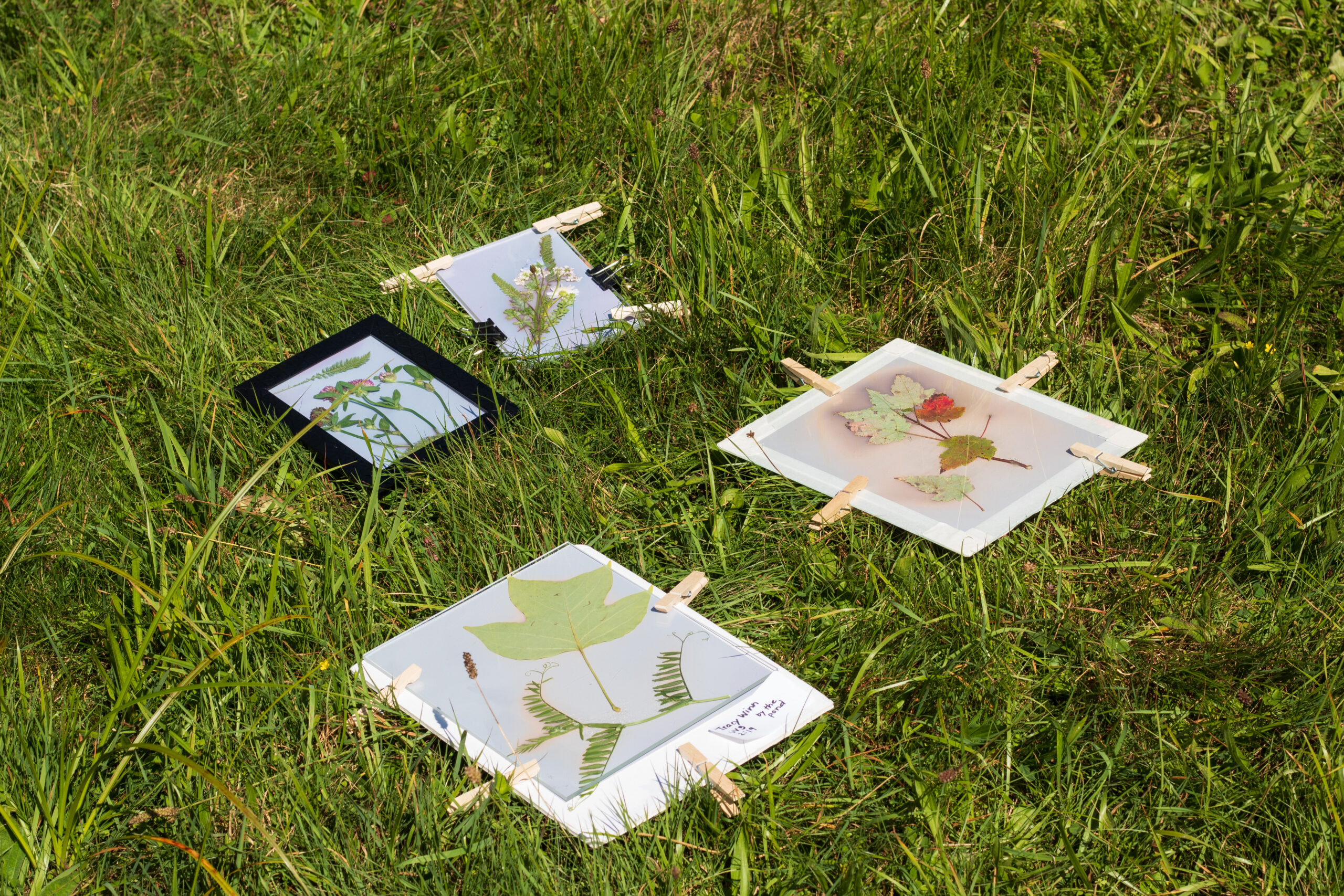
Before modern cameras, photographs were made using light in a variety of ways. Lumen printing is one of the most magical ways to make a photograph: no camera, just light-sensitive paper, an object, and the sun. When natural materials are laid on the treated paper and exposed to the light, the paper slowly shifts through shades of pink, purple, blue, and rust. When you lift the object away, its shape remains, a pale silhouette against the darkened paper. Depending on the time of day, UV intensity, humidity, the pH of the plant materials, and the length of exposure, each print is unique, documenting a moment in place.
The process traces back to the earliest days of photography. William Henry Fox Talbot, an English scientist and pioneer of photography, spent years experimenting with chemicals and light to better capture the natural world. By 1834, he had found a way to reproduce botanical specimens on paper that had been coated with salt, then brushed with a solution of silver nitrate and exposed to sunlight. The leaves and flowers he placed on the paper blocked the light, leaving silhouettes against a dark background. He called his discovery “the art of photogenic drawing.”
Botany and photography were linked in many ways from the very beginning. This connection inspired me to share the process on our river tours as a special way to observe the riparian species along the river: ecological learning and observation, followed by art making with the environment.
Lumen Printing on the River
Thinking about fall phenology, I introduced lumen printing as a way to better understand native riparian plant species and their role in the health of the river.
These river tours combined environmental education and ecological observation of river corridors with the visual arts practice of lumen printing. Participants engaged directly with fall phenology and the seasonal changes of the river, while creating artwork that reflects their relationship to place and community. Lumen printing requires patience, waiting while the sun creates the image, which offers an opportunity to slow down, observe, create, and reconnect through shared experience by the water. While learning about the roles different riparian trees and shrubs play along the river, participants collected materials to make their prints.
Pausing the Light and Packing Up the River Prints
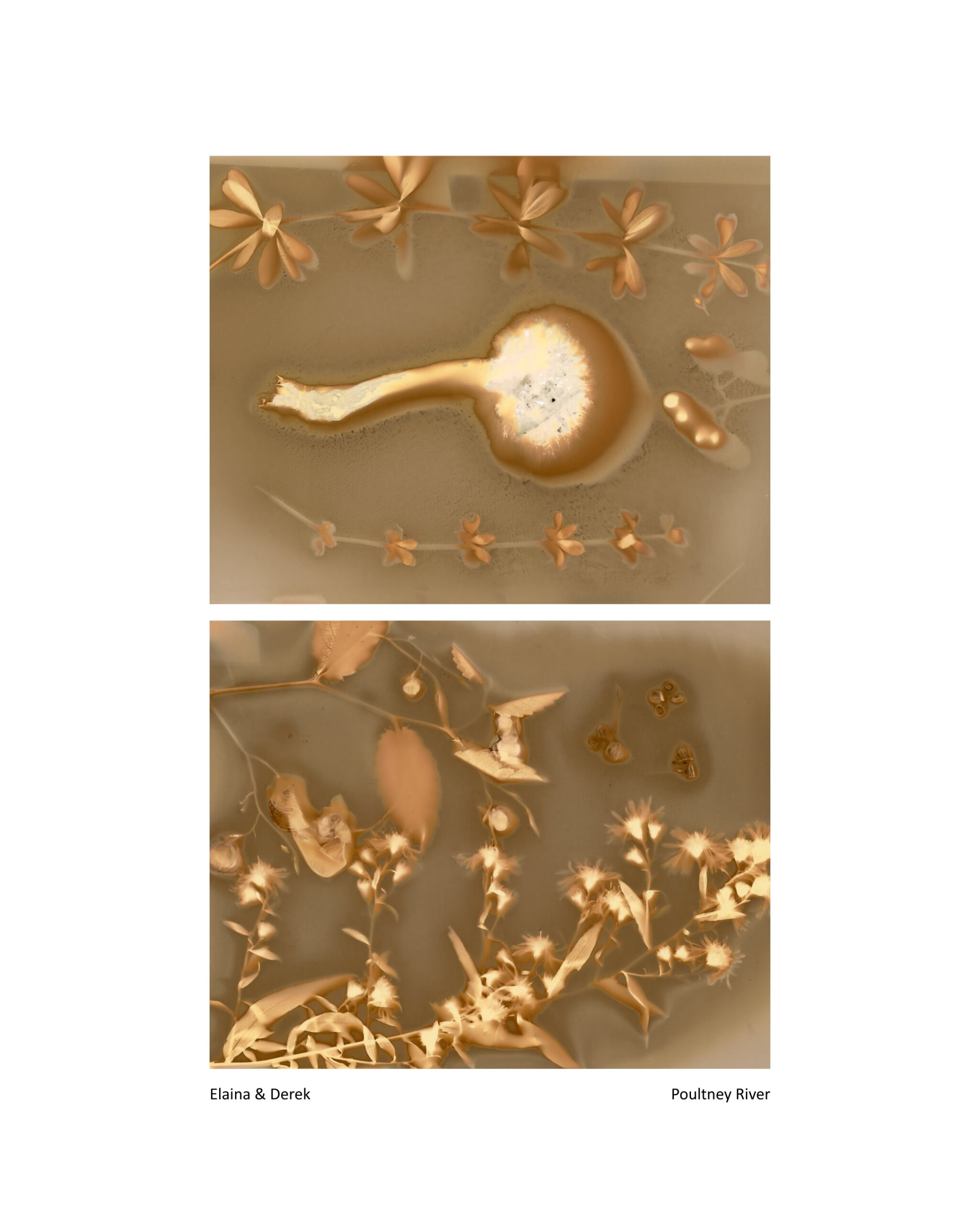
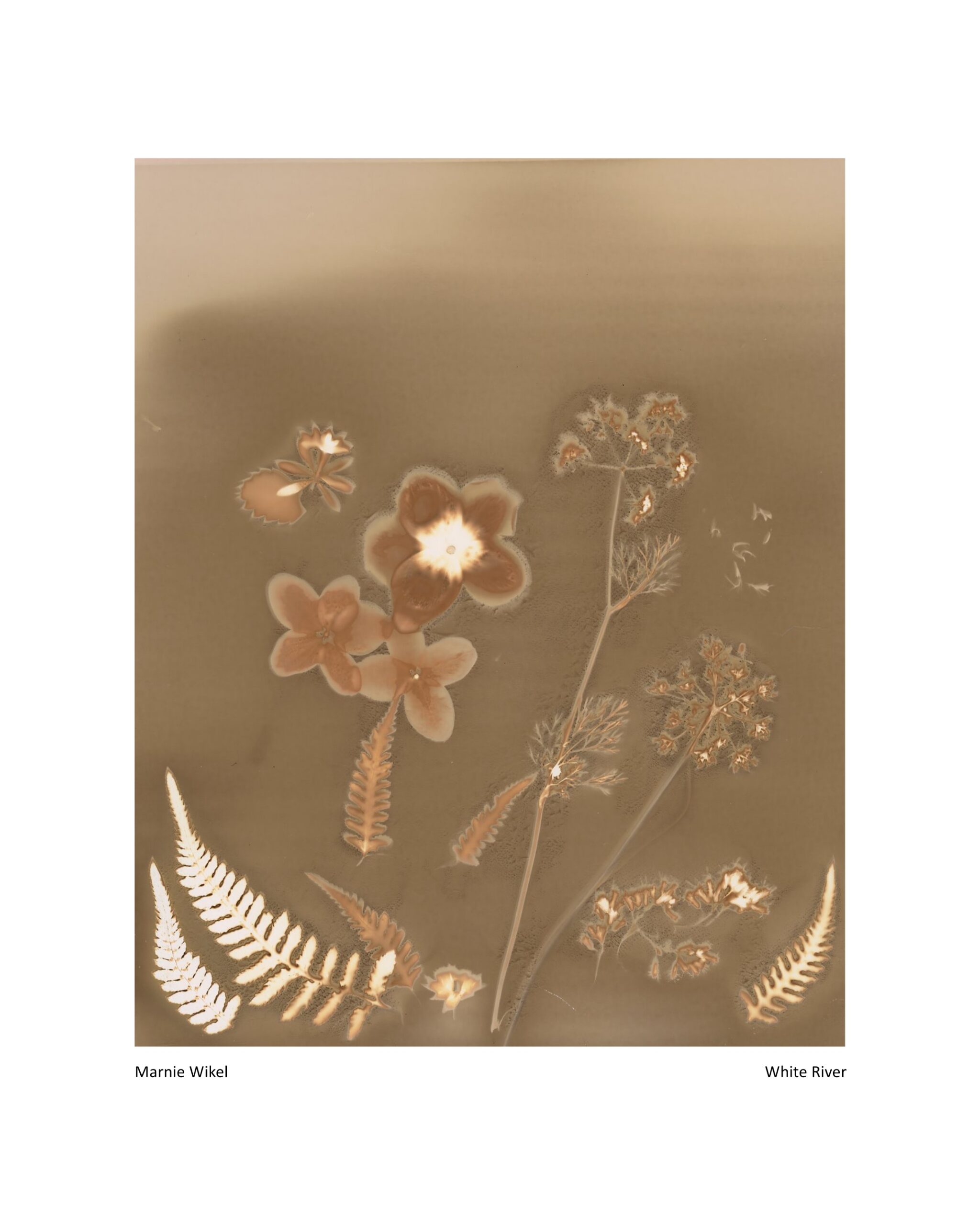
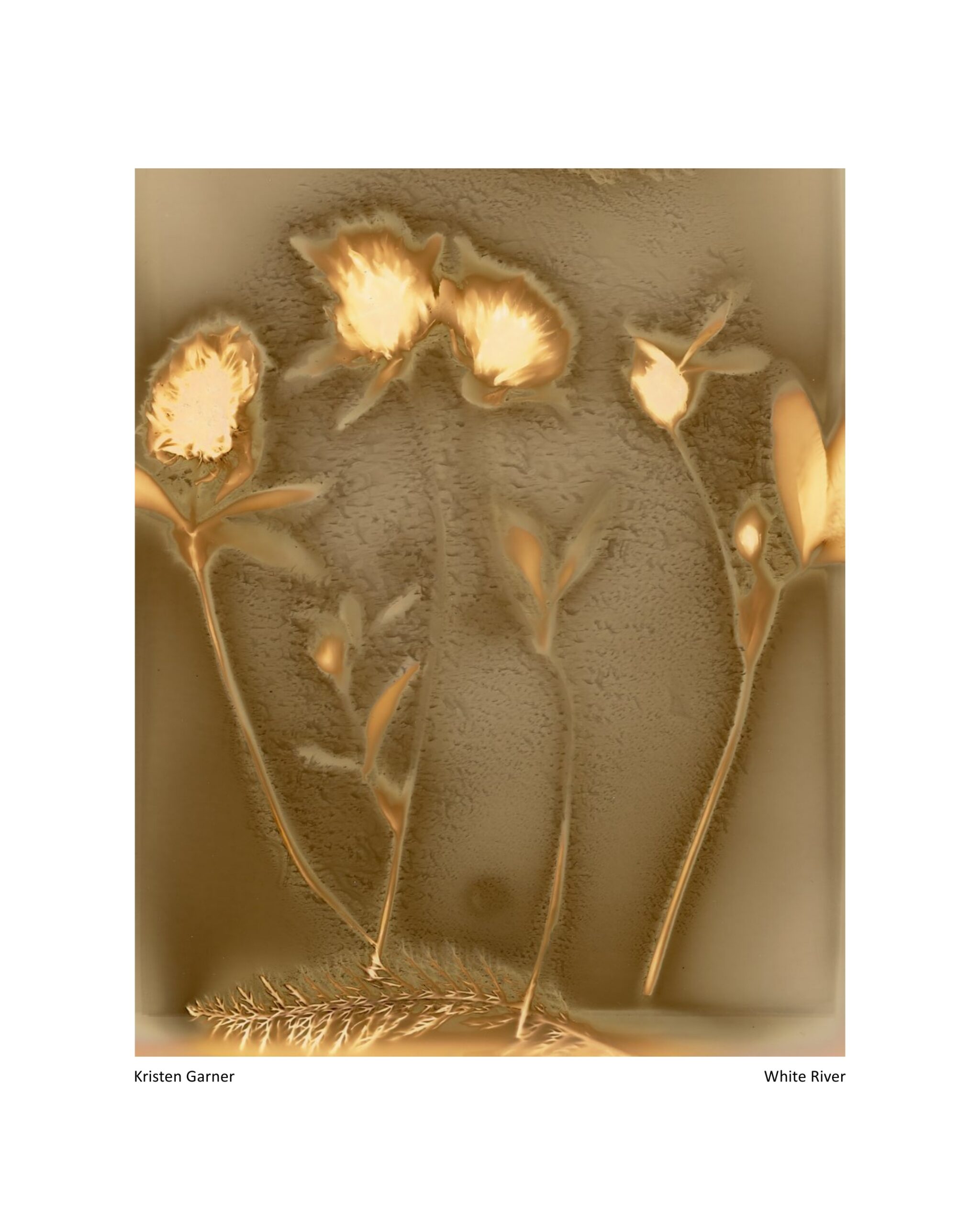
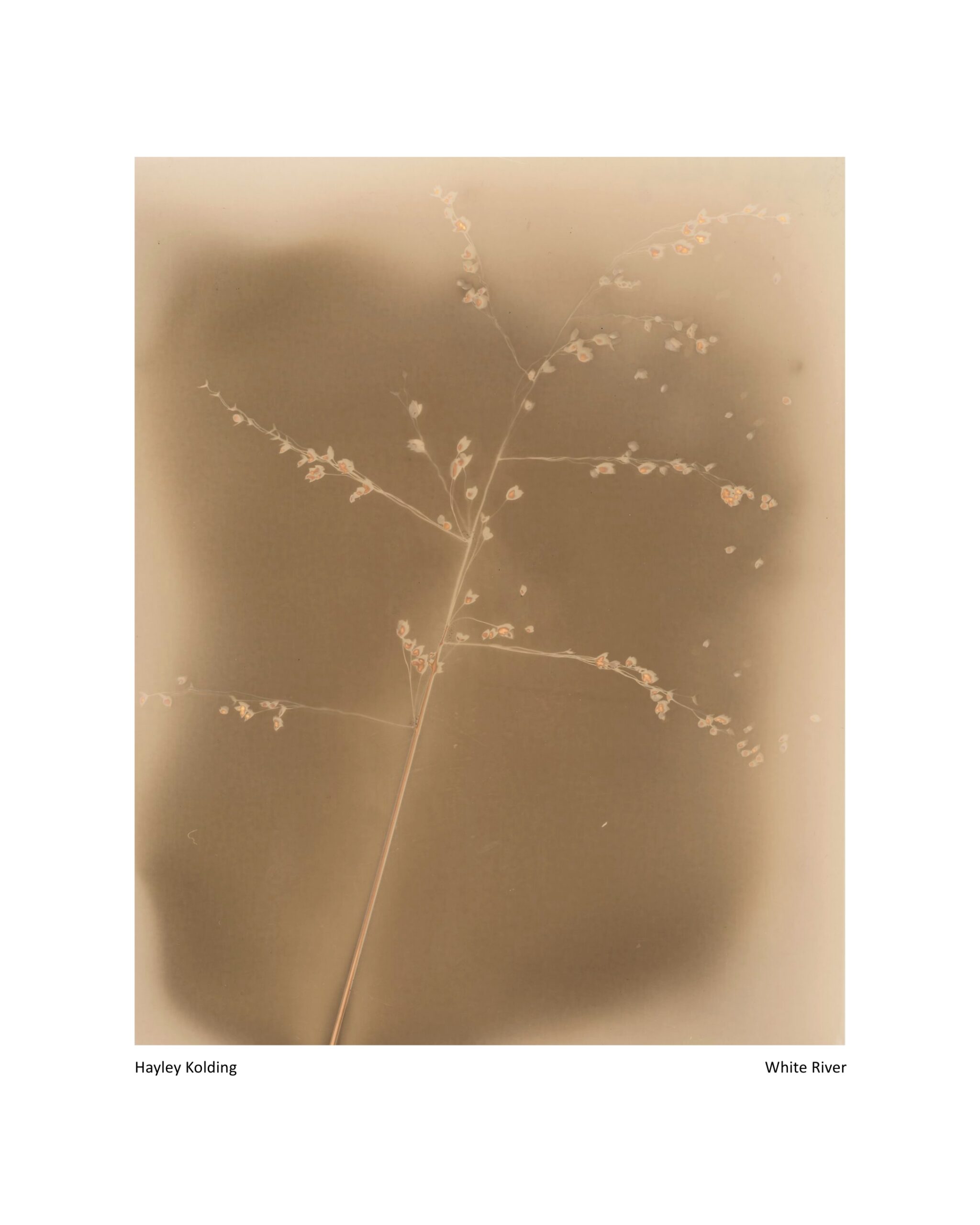
The work didn’t end at the river corridor. After each event, one on the White River and one on the Poultney River, I packed the exposed prints in a light-safe box and brought them to the darkroom at Burlington City Arts. There, I scanned each print, then used a chemical fixer to stop the image from changing further. Fixer essentially makes images permanent. After the sun brings out the visible image of the plants placed on the treated paper, the unexposed light-sensitive material, in this case silver halides, remains. The fixer dissolves it, making the paper insensitive to further action by light.
Once the prints were fixed and dry, I packed each one in an envelope and mailed it to the participant who made it.
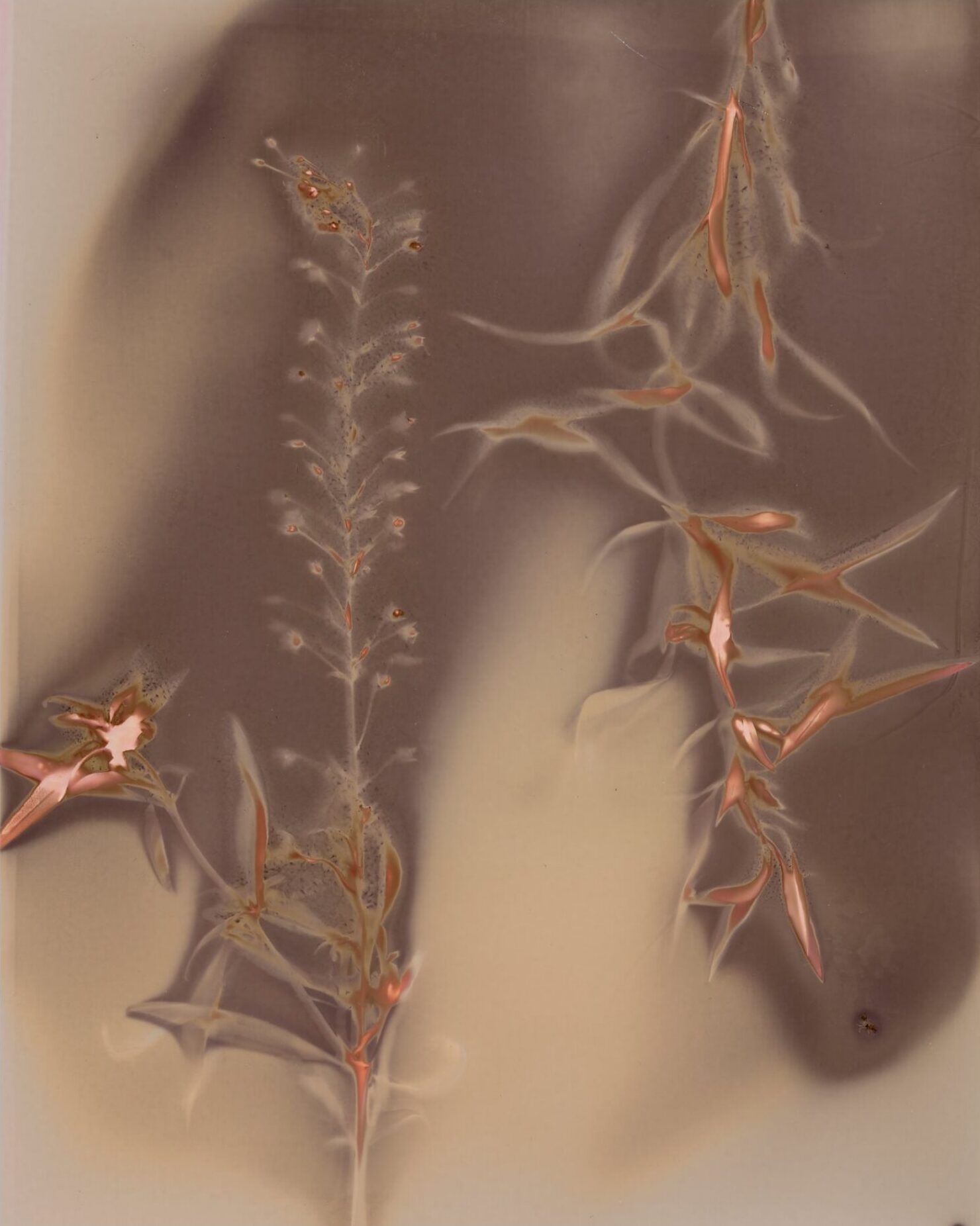
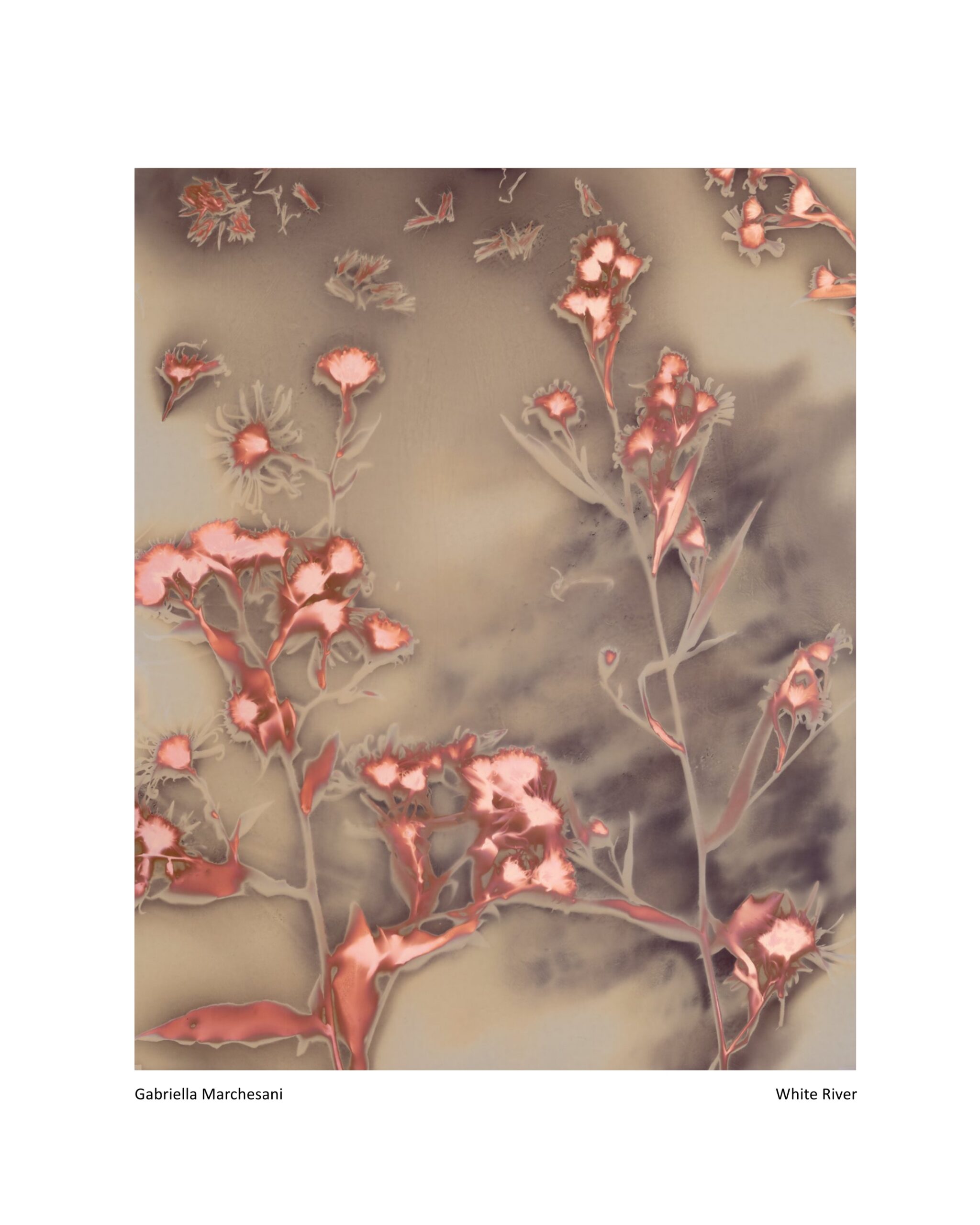
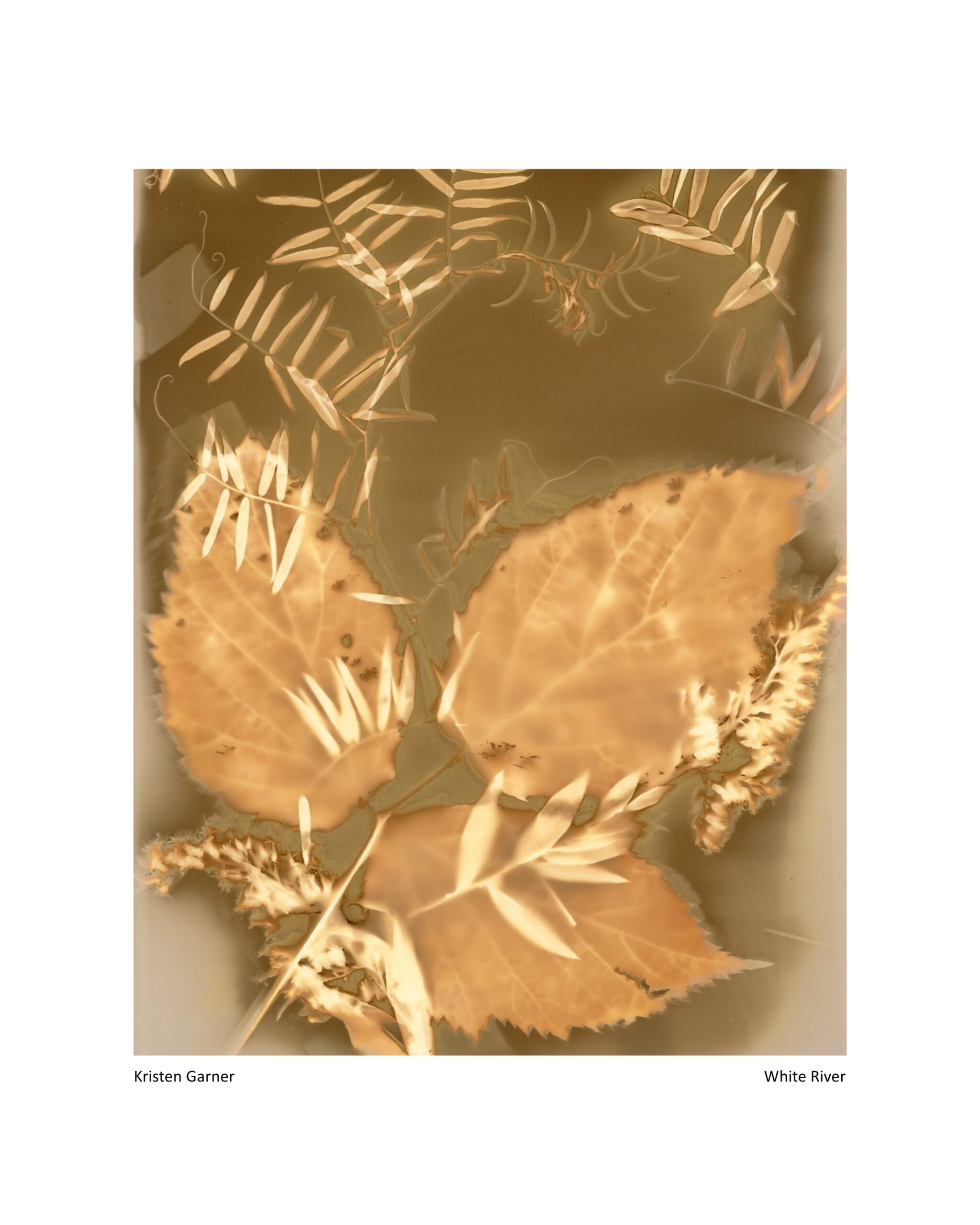
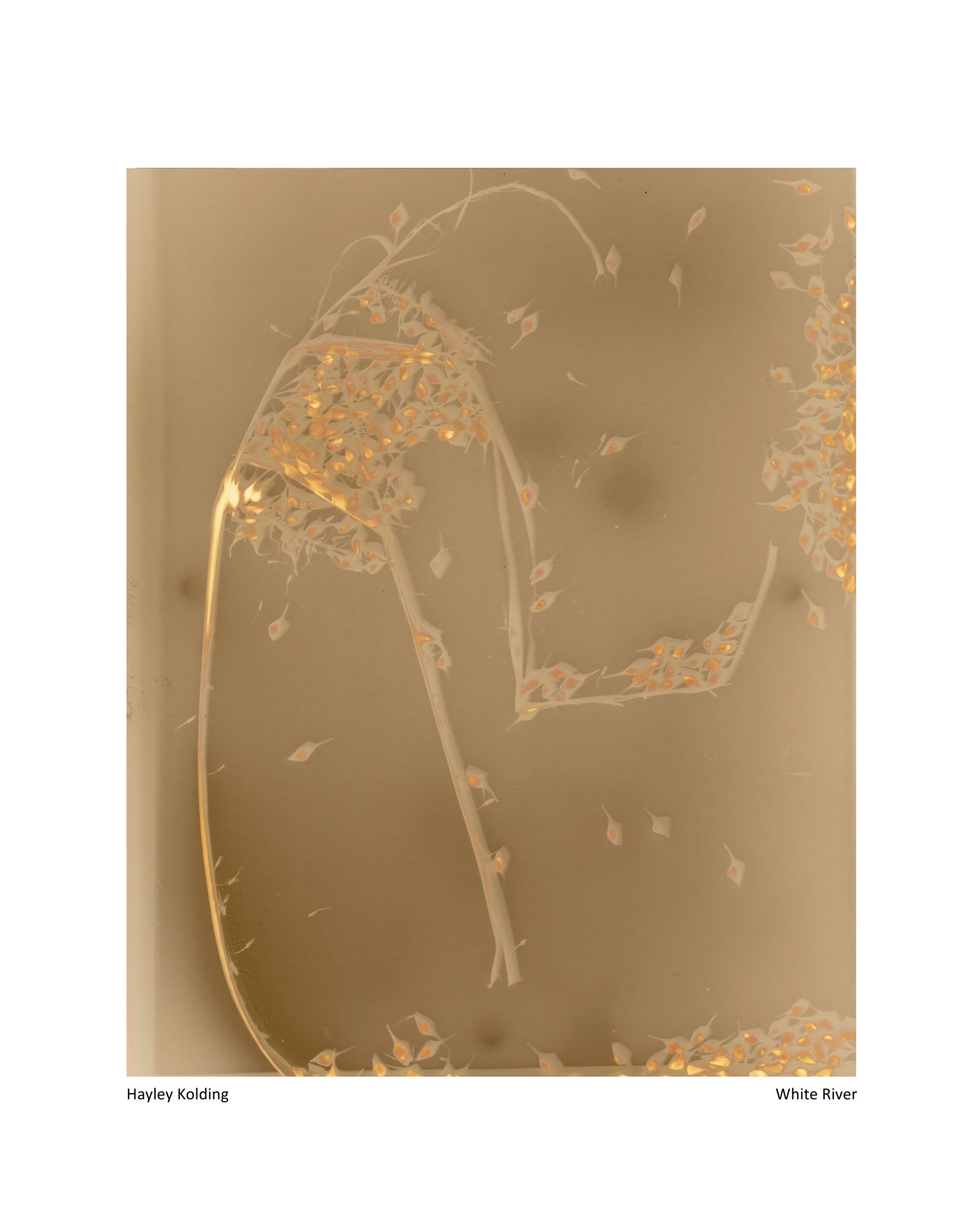
Below are the finished prints, each one a record of a place, the weather, a time of year, and the people who spent an afternoon by the river.