All illustrations by Gabriella Marchesani.
Rivers are a special place in the winter, the silence of the currents that have been frozen with the blanket of snow absorbing the sound waves of the remaining moving water. The silent riverscape draws attention to any activity, like the slap of a beaver’s tail as an alarm call or a big splash of an otter on the hunt for a fish. In this stillness, a group of non-hibernating animals remain active. Vermont is home to a group of resilient swimmers that have no problem hopping in and out of the freezing cold water.
Beavers
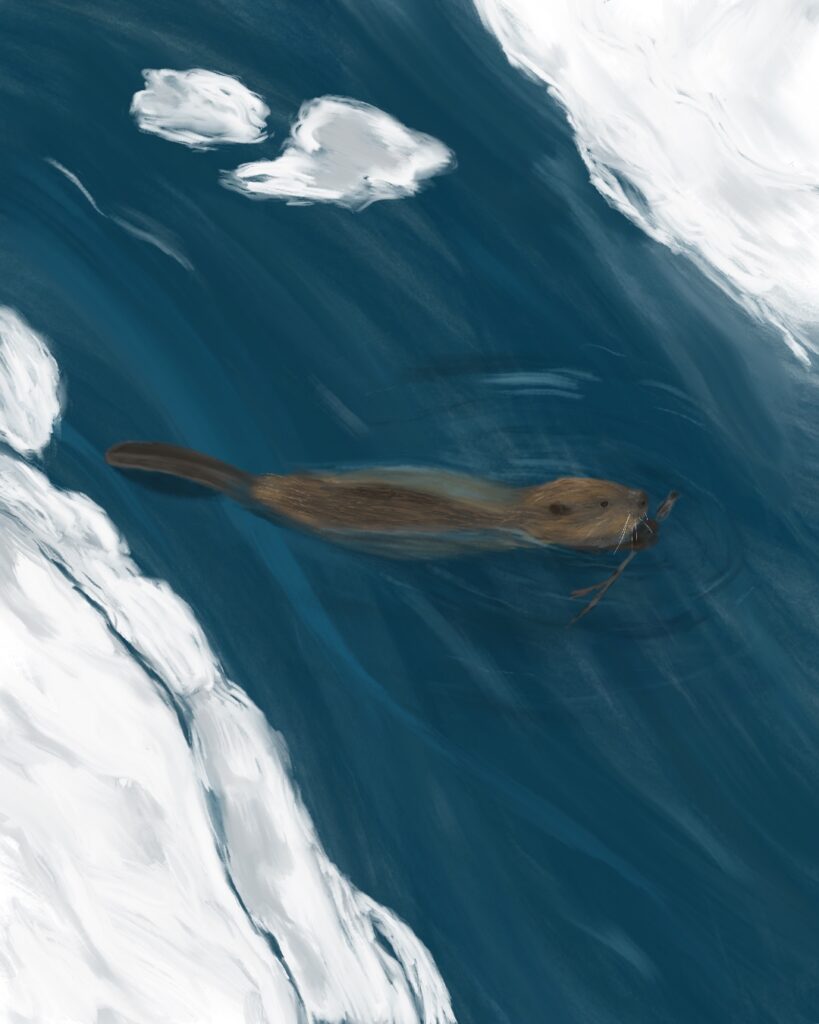
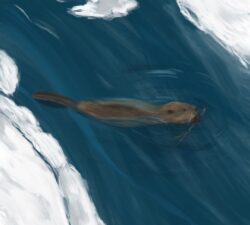
North American beavers have paved the way for themselves and others to thrive in the winter rivers with their exceptional engineering skills. During cold snaps they resort to the lodges they’ve built, which act as their warm cozy retreat. They use logs, rocks, grass, and mud to seal these structures, acting as a layer of insulation when it freezes. One lodge studied in Ontario was recorded at 32°F while the outside temperatures ranged from 19°F to -6°F! Abandoned beaver lodges have been found to serve river otters, muskrats, and minks as their new homes, keeping them warm in the winter.
Beavers also have physical adaptations allowing them to thrive in the winter. Their webbed feet propel them through the water, unbothered by ice or snow in their way. Their teeth give them the power to gnaw down trees to make their incredibly well engineered homes. For warmth, beavers have thick fur covered in castoreum, a water repellent oil, which they comb using their hind foot. Under their skin, a layer of fat provides additional insulation to stay warm swimming in cold water. Their tails store fat and release body heat, helping them regulate body temperatures.
With these adaptations, beavers can handle anything winter brings them. They have been observed biting into ice, pushing up from below the ice, and breaking through frozen surfaces to build tunnels to their lodge.
Muskrats
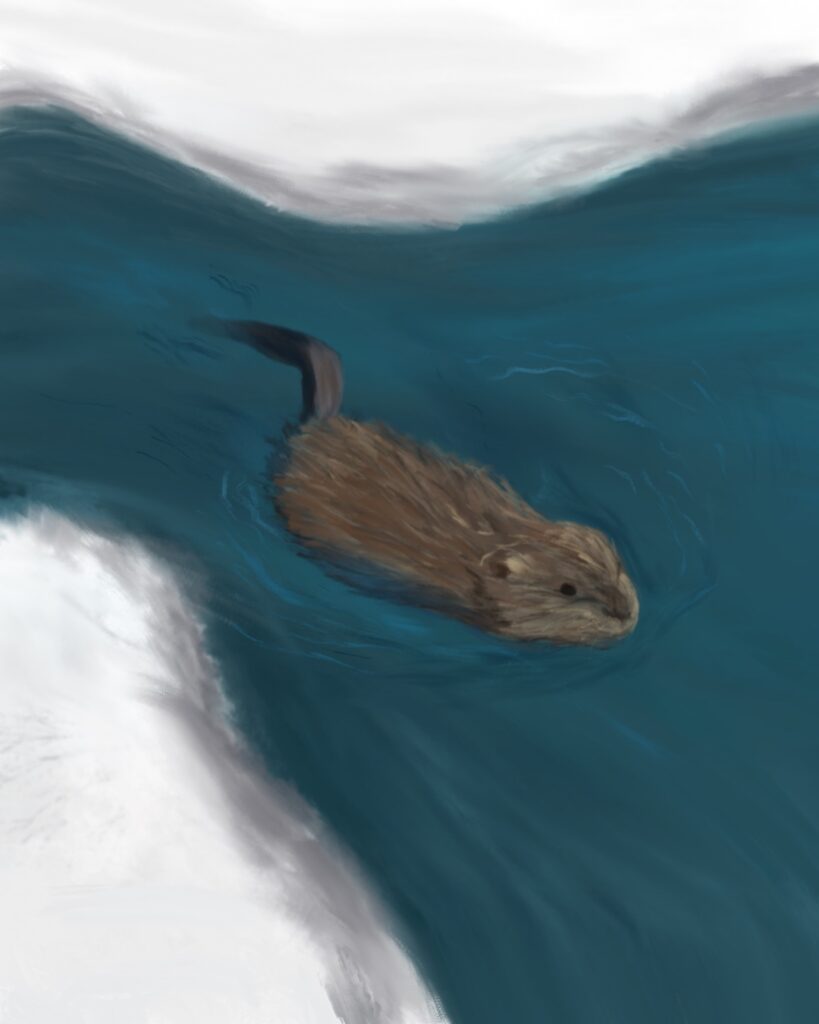
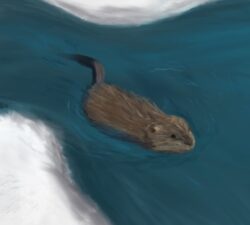
While these rodents look a lot like beavers, they’re much smaller. Beavers average around 60 pounds, muskrats only weigh about three pounds! Another difference is their tail; muskrats have long vertically flattened tails covered in short black hairs which they use as a rudder for swimming, whereas beaver tails are flat horizontally and covered in scales. 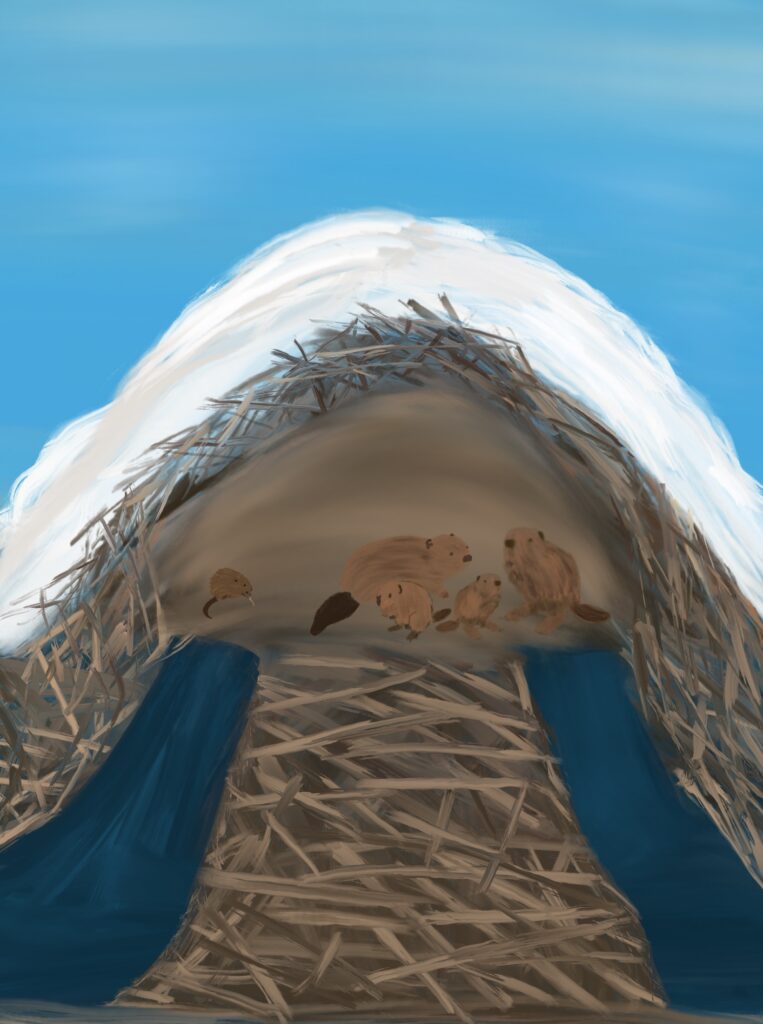
Cameras inside beaver lodges have captured muskrats cohabiting with beavers during the winter! It has been thought to be a mutually beneficial relationship: beavers provide a warm enclosed shelter, and muskrats provide their extra body heat. While muskrats can build their own lodges, they are much smaller and built with vegetation like cattails instead of sticks. Since beavers feed on woodier plants and muskrats eat roots, tender stalks and the leaves of plants, they don’t compete for food or territory.
River Otters
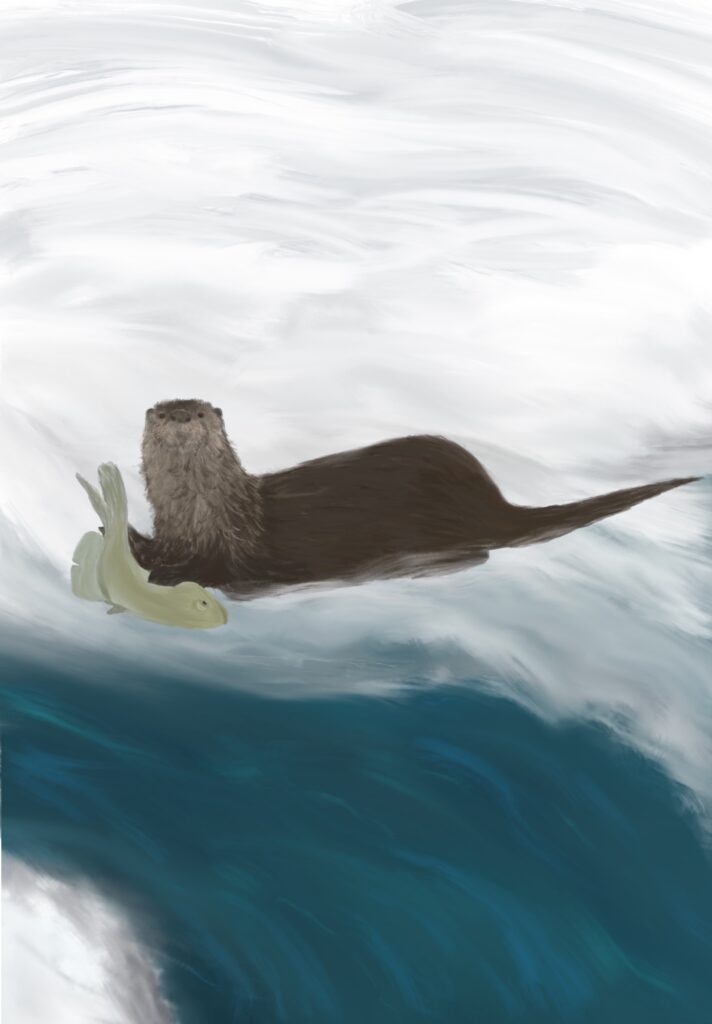
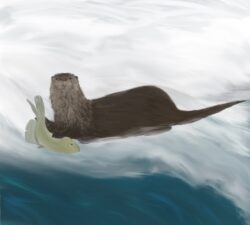
During the wintertime, rivers are a hotspot for otters. As lakes and ponds freeze over, many otters may wander over to the open water of rivers and streams. Not only do they thrive in winter conditions, they play in them! Snow covered riverbanks become the perfect slip n’ slide for otters to dive and glide into the water.
River otters have two layers of fur to stay warm and dry. Their undercoat is a dense layer that traps air in between skin and fur, acting as a warm blanket, while their outer coat is a coarse layer covered in a waterproofing oil that prevents water from getting down to the undercoat layer. Their streamlined bodies and fur allow them to move smoothly in and out of the water.
Minks
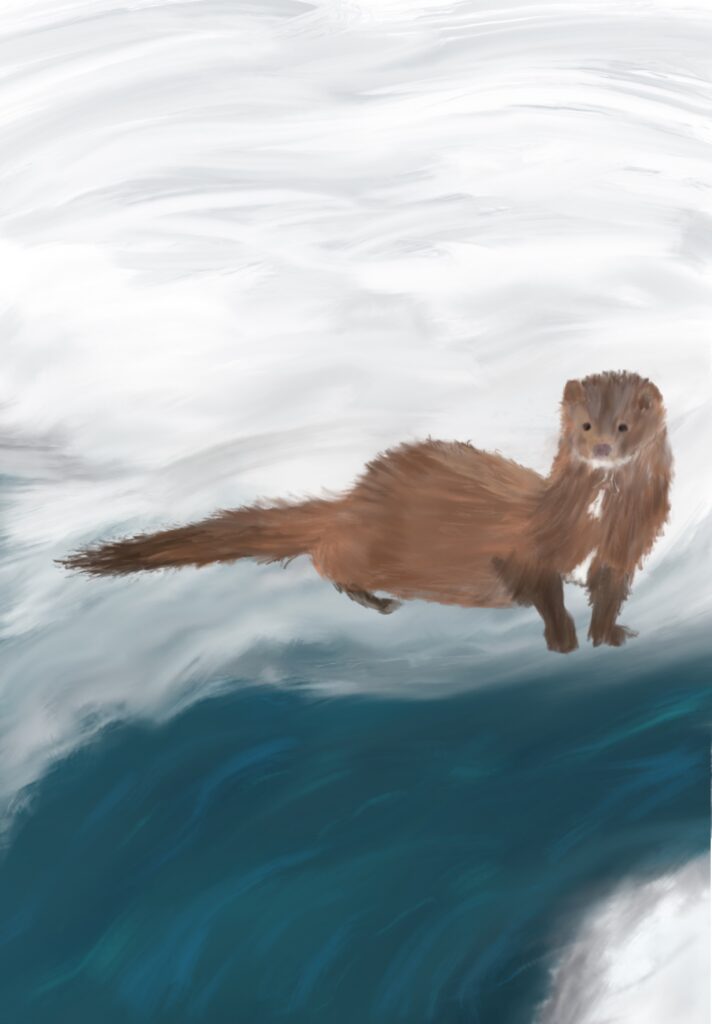
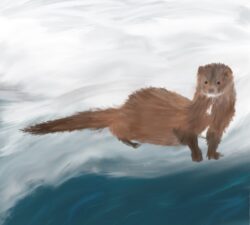
Mink’s fur changes to adapt to seasonal conditions. In the winter its coat is denser, longer, and softer, fitting snugly to provide insulation. During the summer their coat is short and sparse to suit warm temperatures.
Mink are solitary and curious creatures, very comfortable in the water and on land. They are often moving along stream and river edges with effortless speed in search of their next meal. As they travel along the bank, they leave tracks in the snow and even holes in the ice where they’ve surfaced to begin foraging.
If winter conditions become too harsh, mink seek refuge in their dens until they can resume activity. As solitary animals, males and females only convene during late winter breeding season. Otherwise, mink do not share territory or dens. While muskrats and beavers can share a space, mink have been known to evict or even kill muskrats to use their dens.
From physical adaptations to structural capabilities, these amphibious mammals have mastered winter warmth. They each rely on their specialized double layered fur, one for insulation, and one for waterproofing, allowing them to comfortably move in and out of Vermont’s icy rivers.
Learn more:
- Wildlife in Winter, How Vermont’s wild animals survive our harsh winter weather
- Winter Wildlife Pt. 2: Beavers Under the Ice – Grizzly bear conservation and protection
- Beavers and Muskrats – Background – Nearby Nature
- How Unique Fur And A Nomadic Nature Help Otters Survive In Winter | Montana Public Radio
- Mink | Vermont Fish & Wildlife Department