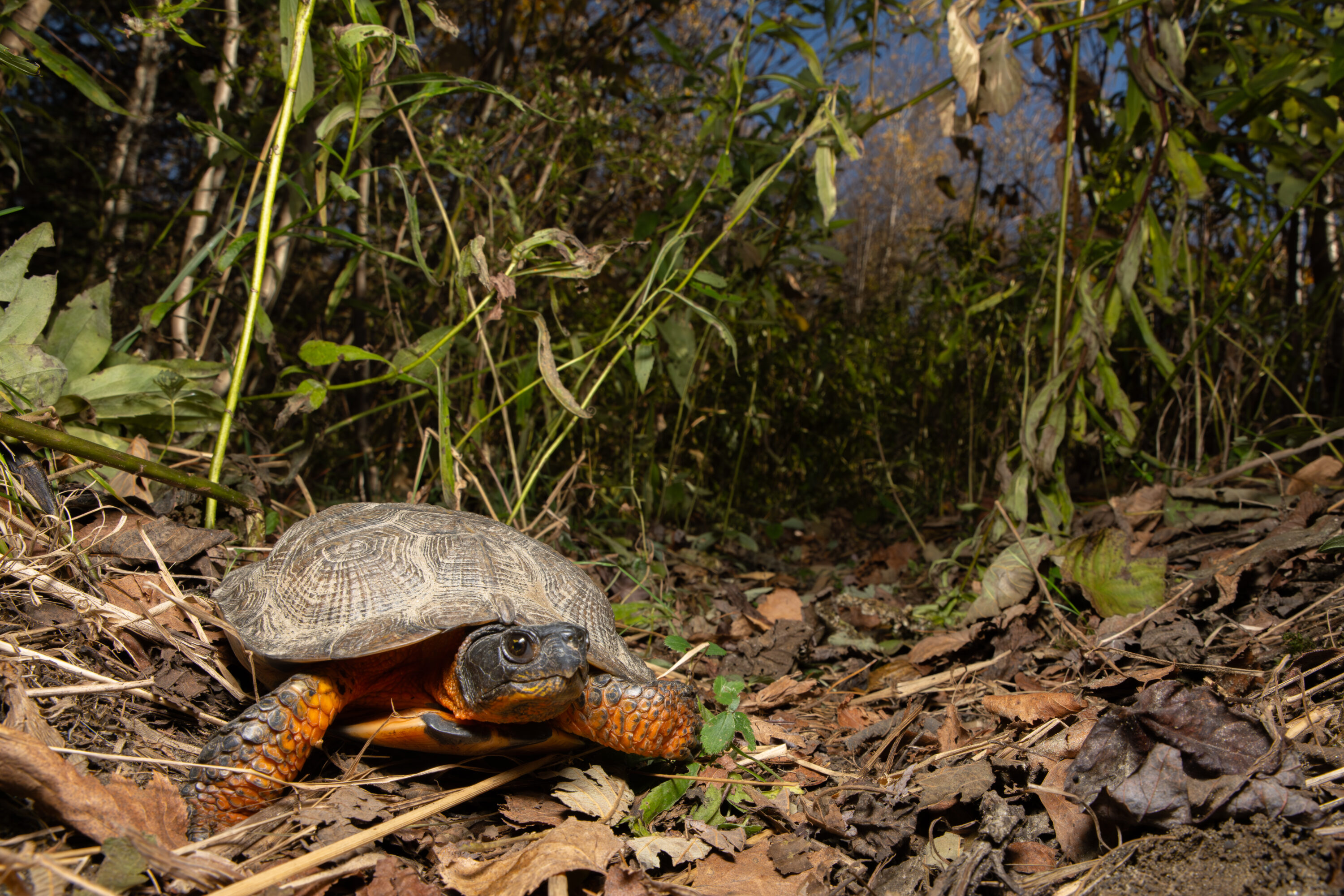
“Look! Egg shells! The turtles were here!” We made these wood turtle nesting beds in May, when the Orianne Society helped us pick the almost perfect spot a turtle might want to lay its eggs – southwest facing, sunny, sandy, and easy for turtles to see from the river. Recent floods replenished deposits of fresh, sandy soil that would make for easy digging and warm incubation, an affirmation of rivers’ life-giving floods. Almost perfect because the land was riddled with knotweed. The plant’s invasive bamboo-like shoots were already tall enough to shade the soil and their knotty roots would block any turtles from digging sandy nests.
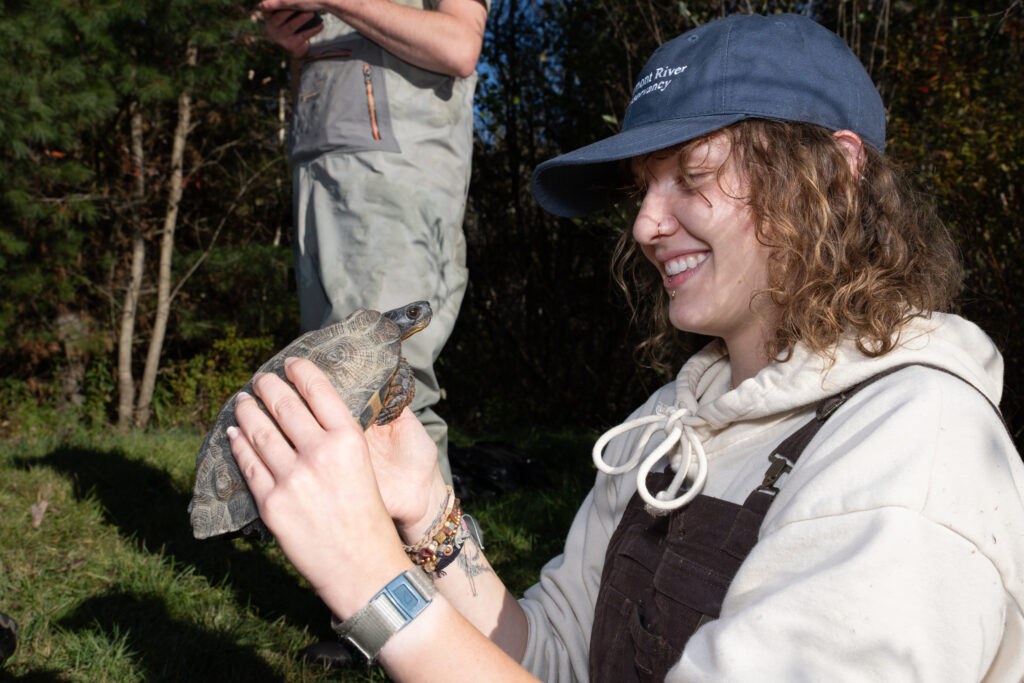
University of Vermont student Emily DiGiacomo face to face with citizen science.
Wood turtles have it hard. After 10,000 years in Vermont, populations are dropping, putting them on a watchlist – species of greatest conservation need. The trouble is, these reptiles’ ideal homes match perfectly with people’s ideal development sites: easy access to water, rich soils, shallow banks, plenty of sunshine. Floodplains. The same places we’ve put our roads, railroads, houses, plowed fields, and parking lots. This competition for homeground – habitat loss – was the original blow to wood turtles. Now there are fast-moving, turtle-crushing cars. Pile on the illegal pet trade, where they’re prized for their vibrant orange skin, along with climate change, which makes it harder to keep eggs at a constant 82° for 60 days. Plus, there are the standard threats of raccoons and foxes with their own families to feed, and wood turtles’ future looks pretty dire.
But we’re helping them chart a new course, and working with the Orianne Society to test out a new recipe for success. First, we protect land they love – riverbends and meanders where water spreads and slows. Then we give the land the gift of time, a rewilding that welcomes nature back to the former farmland, and removes the dangers of tilling and harvesting.
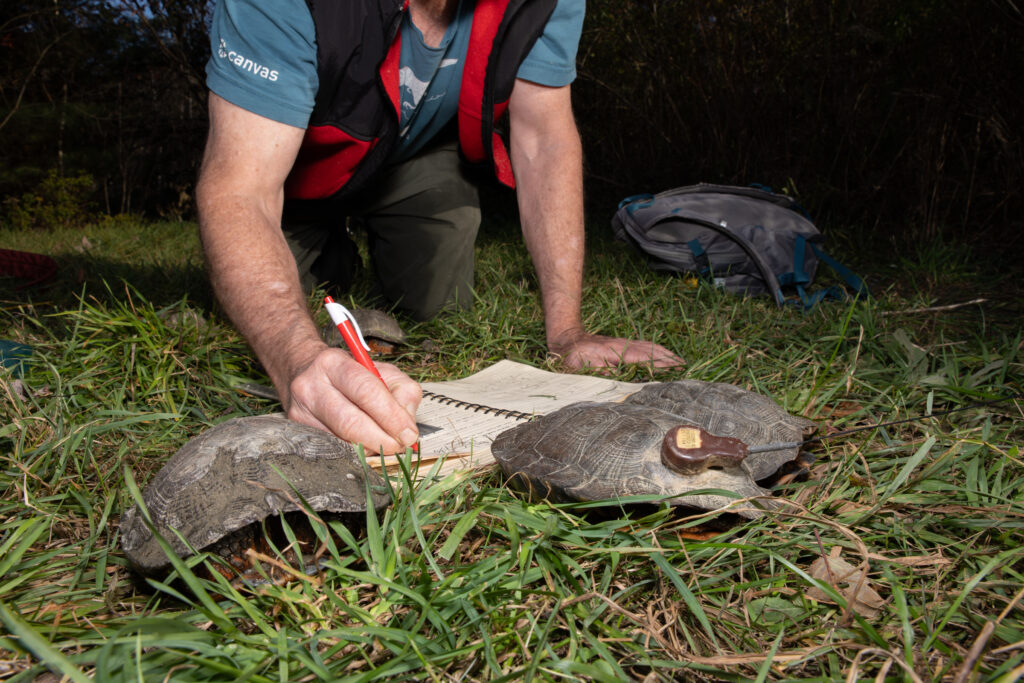
Collecting data in hopes of learning even more ways to help protect this rare species.
Last spring, we took things one step further. We started with a simple idea: if we keep weeds from overtaking the turtles’ beds, the sandy soils will welcome them when they’re ready to lay their eggs. With the help of University of Vermont students, we cut through jungles of knotweed, pulled up the roots, then sifted through the sand one fistful at a time to be sure we didn’t leave a single knotweed root behind. Through sweat and meticulous work, we enhanced a half dozen sandy, warm, weed-free beds, and hoped the turtles would find them.
And find them, they did! Of the multiple beds, each a chance for a turtle to lay up to a dozen eggs, one looked unused, a couple were likely lost to predators, and others showed signs of prints when turtles laid their eggs. Late October, we revisited the beds for some fall weeding and stumbled upon a nest: two decayed unborn turtles; two hatched eggs, the turtles long gone; and two chilly eggs with tiny turtles still inside. It seems the mama dug so safely deep that the eggs would never hatch in the autumn chill. What could we do, but warm those still-body hatchlings in our hands, and hope for the best?
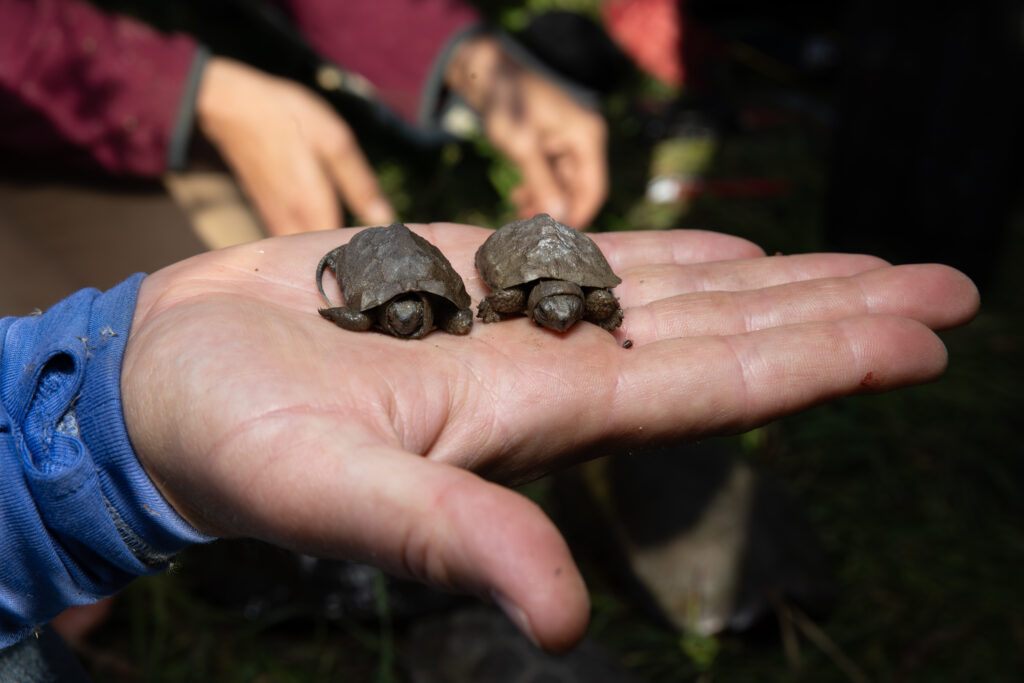
Two warmed hatchlings, ready to spend the next four years in the river.
Meanwhile, we turned our sights to the river, wading in to see if we might find one or two adult turtles, and add their data to the scientific record: weigh, measure, record, release. One temporary captive pulled her head into her shell in textbook turtle defense, another zoomed as fast as turtles zoom in a straight line to the river, another stretched its neck unbelievably beyond its shell to get a good look around. Keeping watch over this turtle corral, the two hatchlings began to wiggle their miniature legs in our palms: two more turtles to send off into the river.
Sitting in the October sunshine, corralling these rare turtles, it was hard to imagine the same spot July 2023 when this floodplain that nurtures these turtles had also nurtured the community when it needed it most: by storing 40 million gallons of floodwater, and helping protect thousands of people downstream from even worse flood damage.
At this bend in the river, nature is taking hold – as floodplain, wetland, turtle nursery – and this recipe may be exactly what saves us – turtles and people alike.
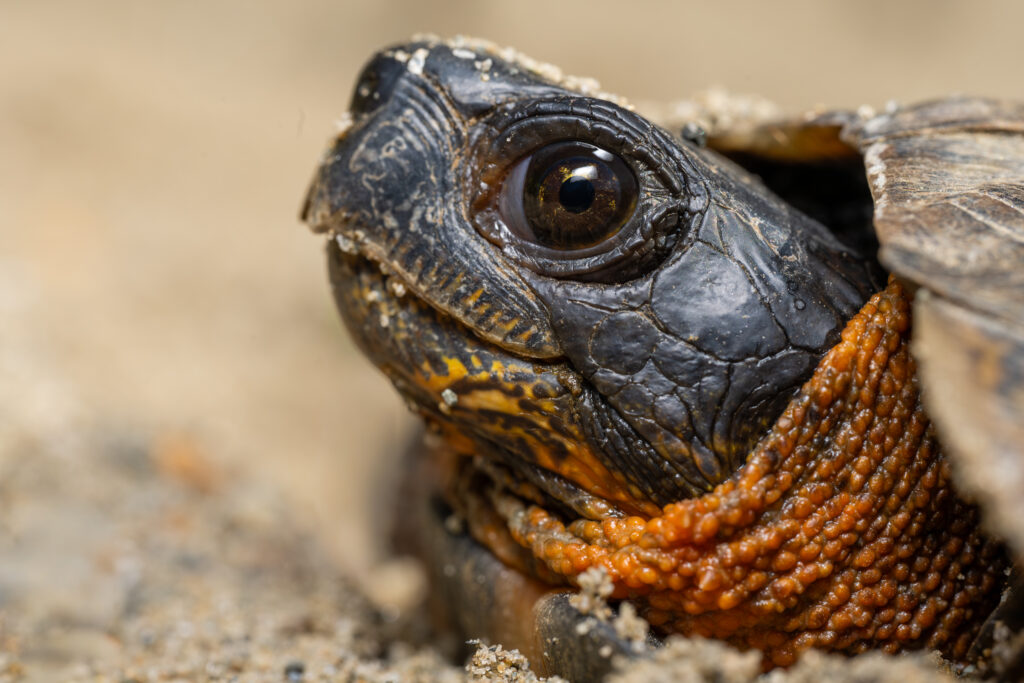
Wood Turtle portrait. Emanuel Soza-Foias