On September 9th, we kicked off our community-based eco-art series with a river connectivity and monoprinting workshop in Johnson, in the Lamoille watershed. Something about the rainy day weather brought the perfect environment for this event. The calmness of the steady rain, diffused light beaming through clouds, and water droplets gliding down the changing leaves delivered a welcoming atmosphere to slow down and pay close attention to detail.
We kicked things off at Beard Park with Remy Crettol, Vermont River Conservancy’s Northern Vermont Conservation Manager, who led participants through the inner workings of rivers. Rivers are often viewed as water moving from point A to point B in a straight line. In reality, they are much more complex. Rivers are interconnected systems, and their health depends on the connections in four dimensions:
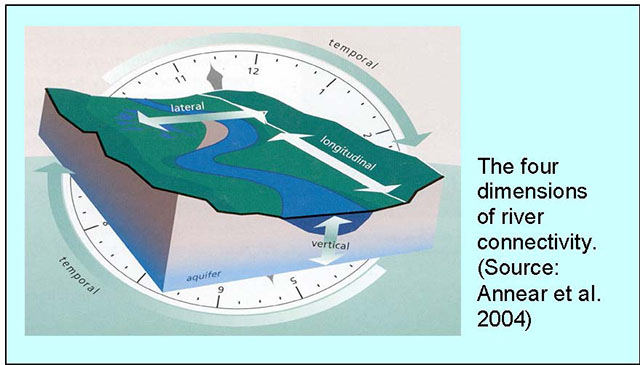
- Longitudinal (upstream ↔ downstream): The movement of water, sediment, nutrients, wood, and aquatic life along a river’s length, from steep, shaded headwaters fed by falling leaves to wide, sunlit mid-reaches to slow, turbid lower reaches. Dams and perched culverts interrupt this flow.
- Lateral (river ↔ floodplain): The exchange between the channel and its floodplain during high water. Floodplains store floodwater, recharge groundwater, deposit nutrient-rich sediment, and create habitat. Levees and channelization cut this connection.
- Vertical (surface water ↔ groundwater): The exchange between the river and the groundwater beneath and beside it, in the hyporheic zone, sometimes called the “river’s liver.” Cold groundwater creates refuges for trout, and streambed gravels filter impurities.
- Temporal (change through time): Rivers change over hours, seasons, and centuries, through spring floods, summer low water, and channels that migrate across their valleys. This natural disturbance builds habitat diversity and resilience.
Healthy rivers depend on all four working together. Vermont River Conservancy works to protect the space and processes that keep rivers connected, not just today but as dynamic systems that change through time. This looks like protecting river corridors, keeping rivers continuous, giving them room to reach their floodplains and wetlands, preserving their connections to groundwater, and letting them move, flood, and evolve naturally. Protecting these connections protects people and wildlife, too.
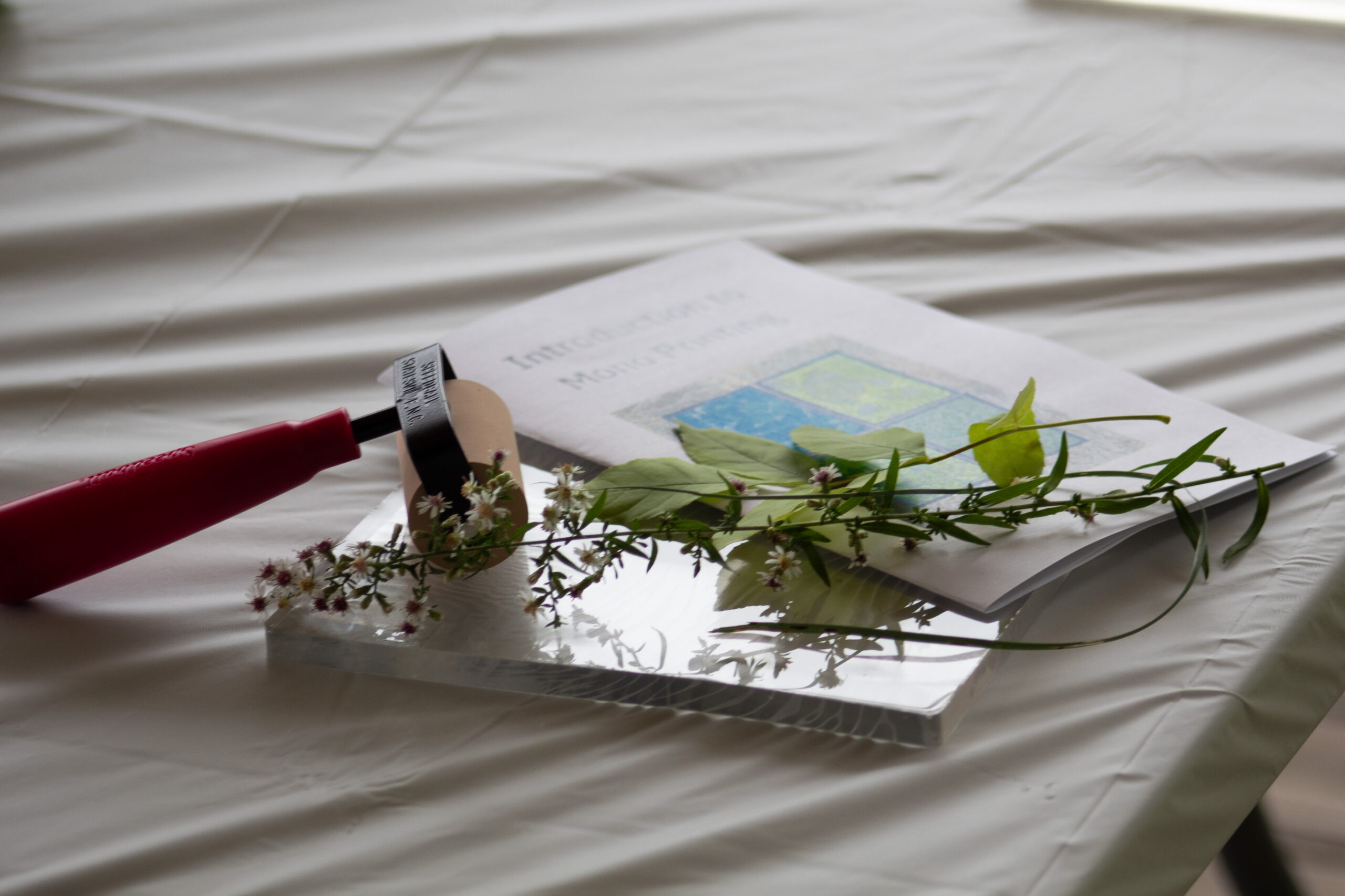
Art supplies set up and ready for participants during the monoprinting workshop. Photo by Gabriella Marchesani.
After rethinking river systems with Remy, we applied our knowledge creatively with printmaker and naturalist Morgan LaChance, who led a beginner-friendly monoprinting workshop using Gelli plates. Participants gathered leaves, grasses, ferns, and small stones from the riverbank and used them to make one-of-a-kind prints inspired by the patterns, textures, and movement of the river. From Beard Park, we moved to Legion Field for printmaking under a gazebo.
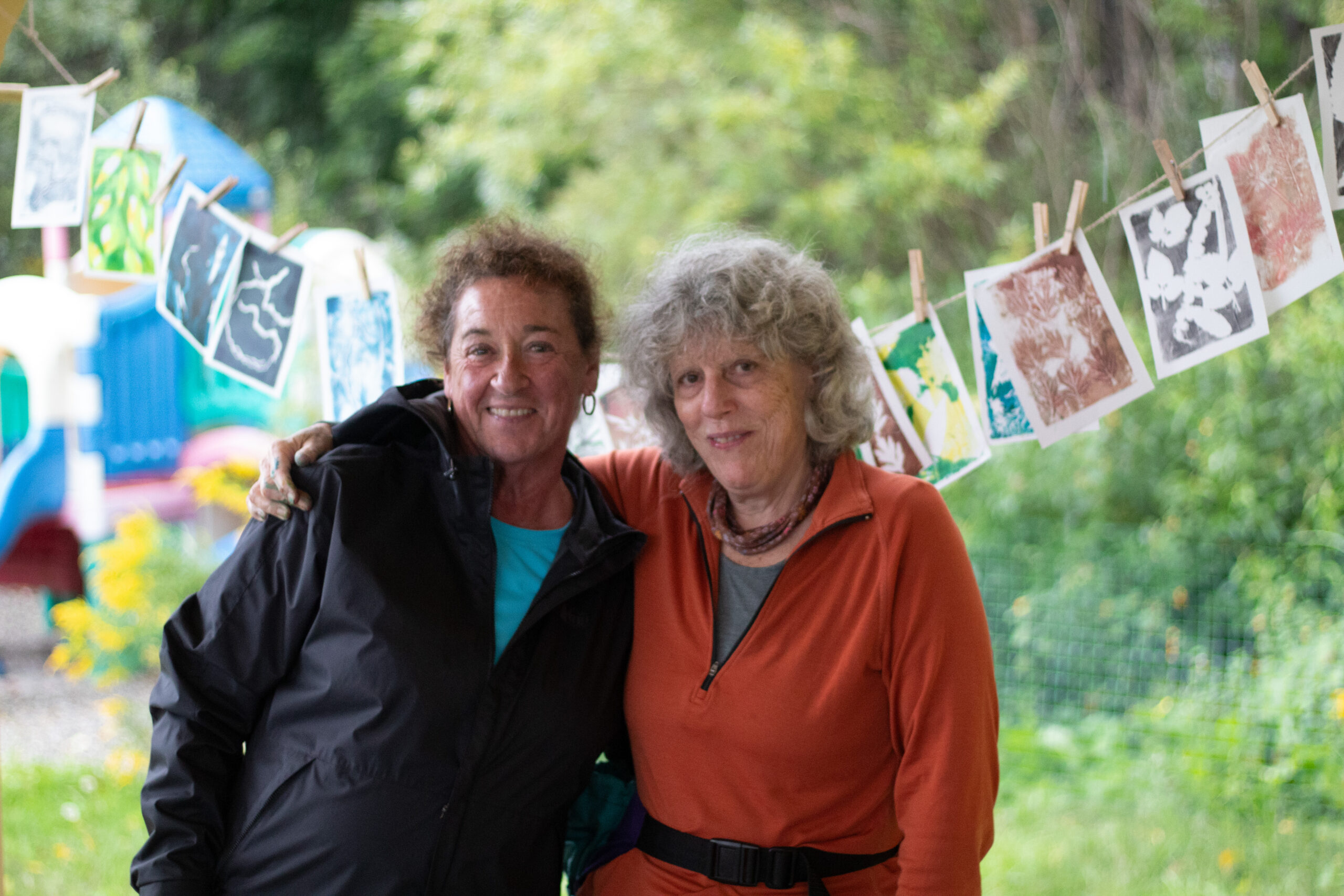
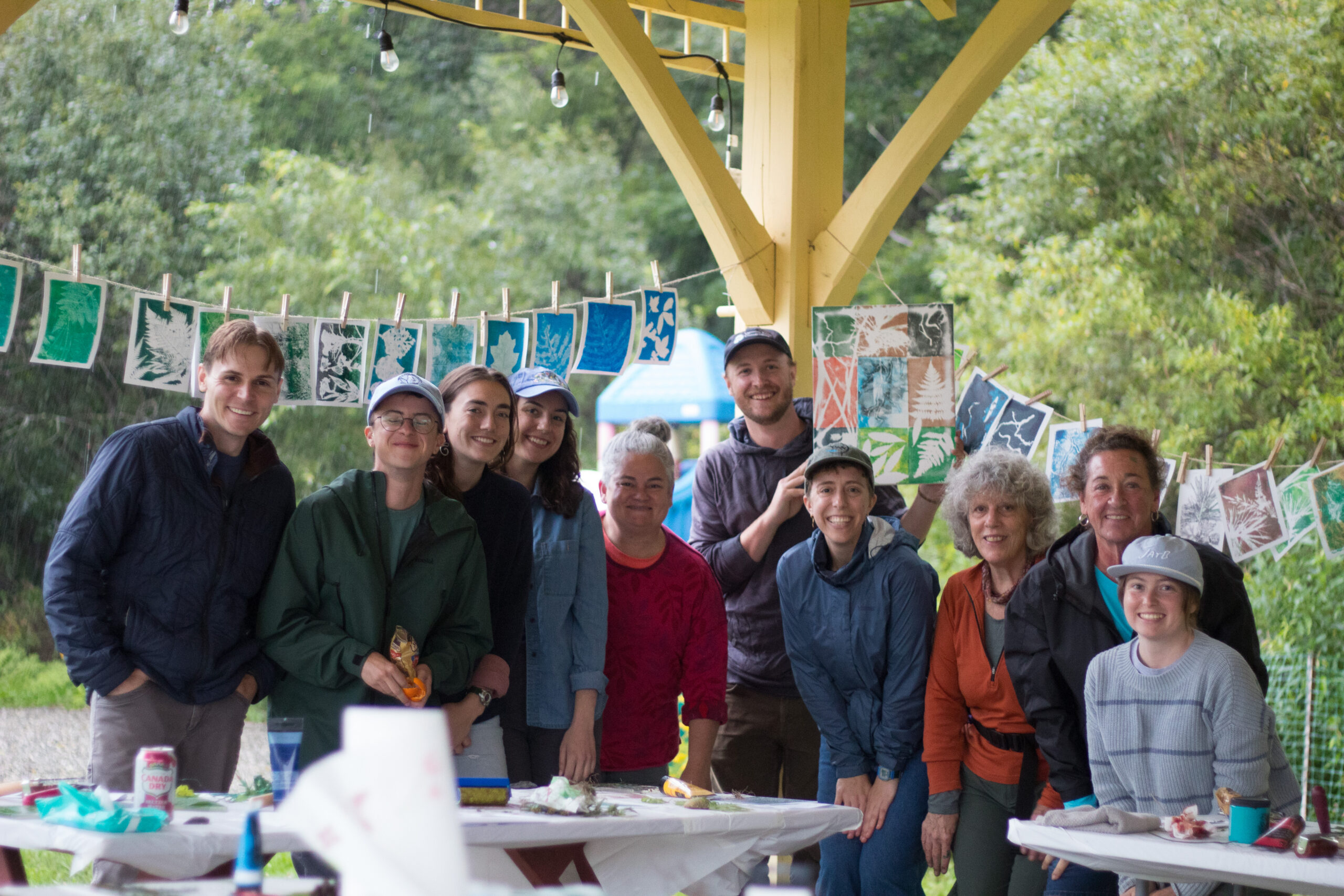
Participants smile and enjoy a day of community art-making during the monoprinting workshop. Photo by Gabriella Marchesani
Morgan created printmaking prompts tied back to river ecology. Folks layered leaves and ferns along the edges of their plates, representing where rivers meet land. Some used dried-up tree roots on their Gelli plate to capture how a river’s course bends over time, mimicking a braided river. Others got lost in creativity, experimenting with collected materials and different ink colors.
For anyone new to the medium, monoprinting is a printmaking process in which each print is unique, unlike relief printing, which produces duplicates. Gelli printing, the subtractive method we used, involves rolling a solid layer of ink onto a soft, reusable plate, removing ink with natural materials or tools, and pressing paper on top to reveal the design. It’s forgiving and playful, and it pairs well with a rainy afternoon spent thinking about water.
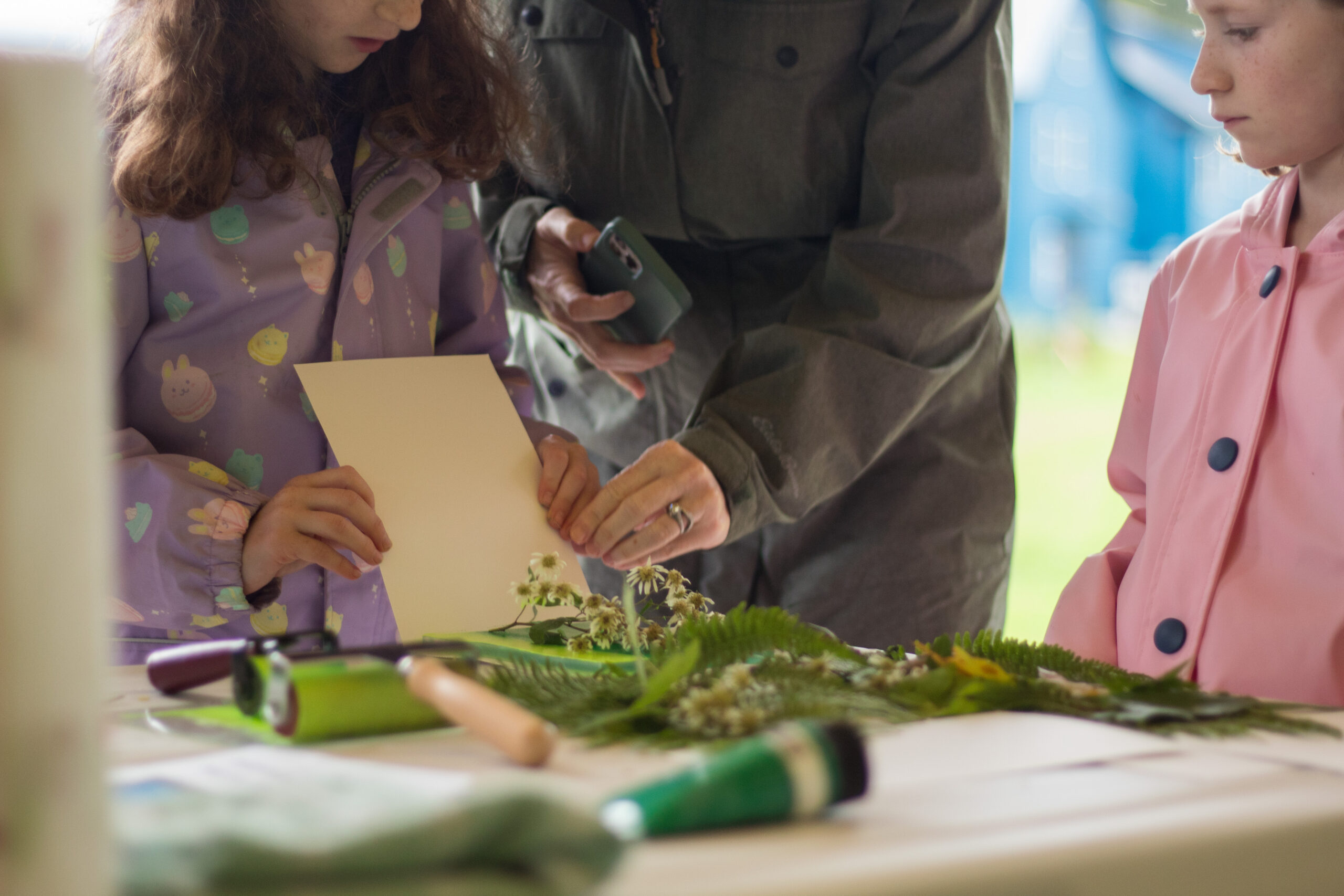
A mother helps her daughter apply ink to a Gelli plate during the community monoprinting workshop. Photo by Gabriella Marchesani.
By the end of the event, participants left with unique prints in hand and a deeper appreciation for how much complexity lives inside a river, from the groundwater below to the sediment patterns built up over time. Pairing science with hands-on art makes these river tour events a memorable way to connect with the landscape.
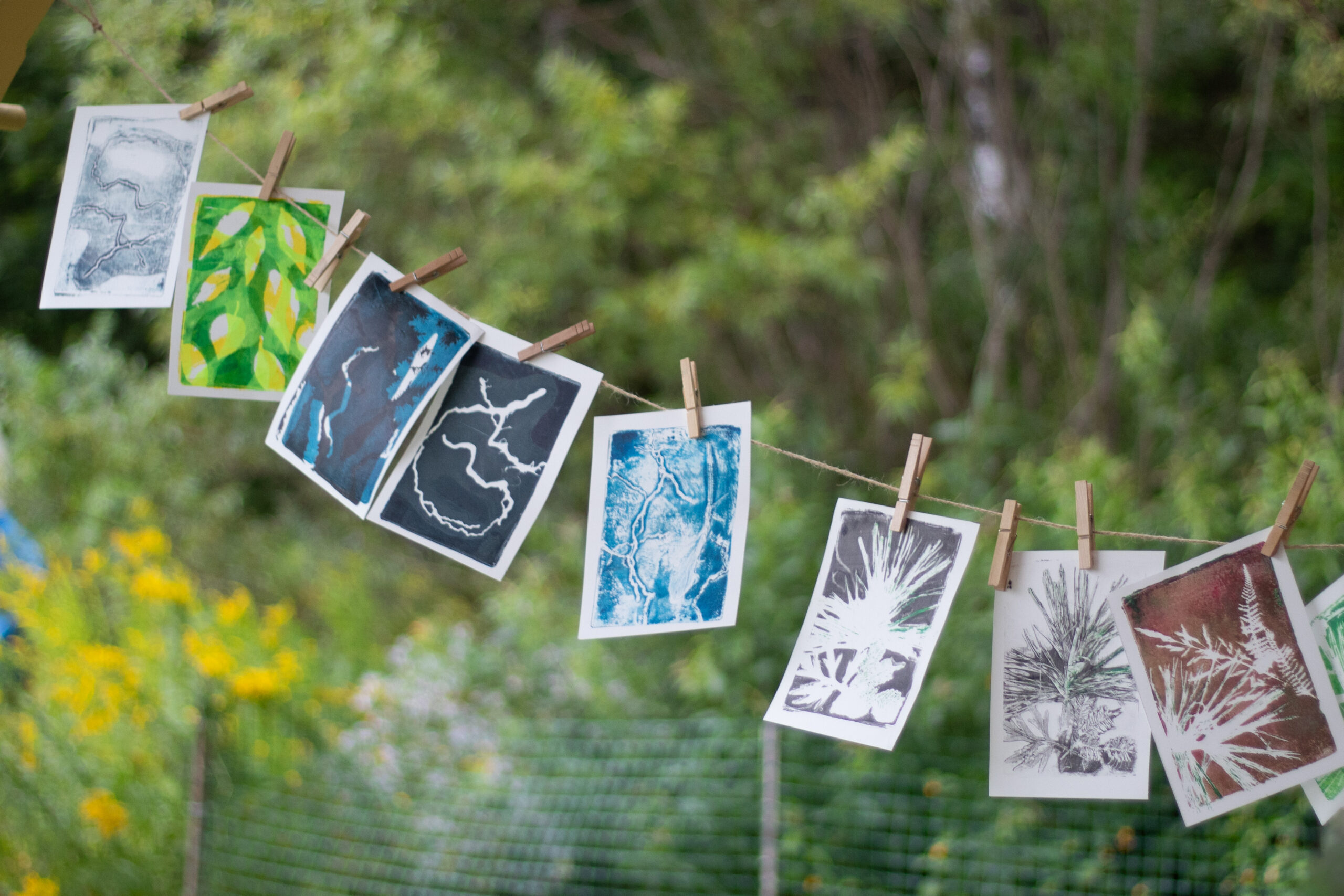
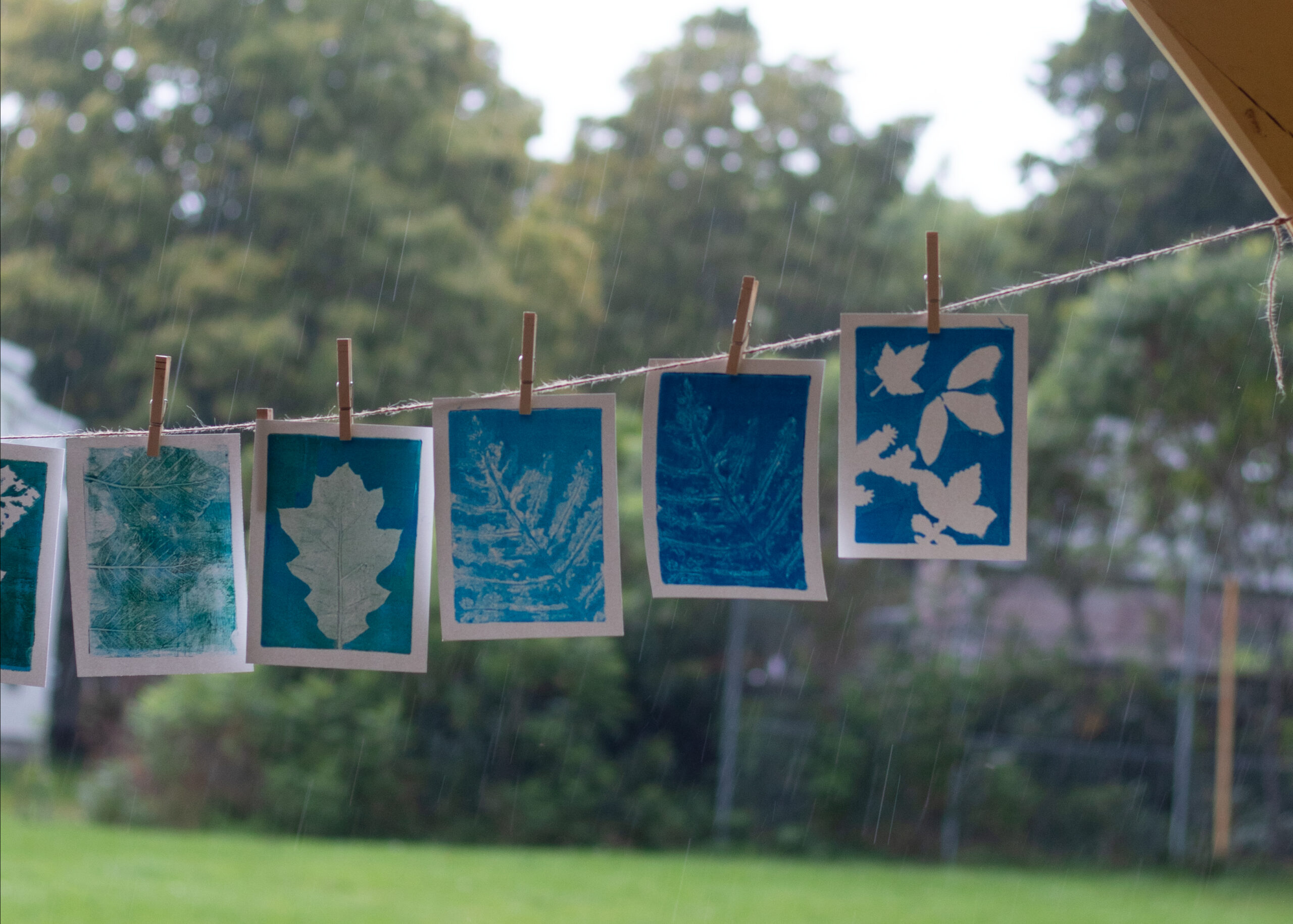
Colorful monoprints made during the workshop dry on a rainy afternoon. Photo by Gabriella Marchesani.
Just as there are multiple dimensions that determine a river system, there are multiple steps that determine the outcome of a monoprint. Slowing down and paying attention to—ink rolling for printmaking, or stream flow in a forest for rivers—allows for deeper connection to place.