Summertime in Vermont brings the perfect weather to cool off in one of the state’s many magical swimming holes. Few things feel more refreshing than taking a dip in a cold river beneath the shade of a forest canopy after a long day.
Hot summer days are often followed by heavy rain, and climate change is making these storms more frequent and intense. Although the sunshine after a storm may tempt people back into the water, swimming after major rain events can be dangerous.
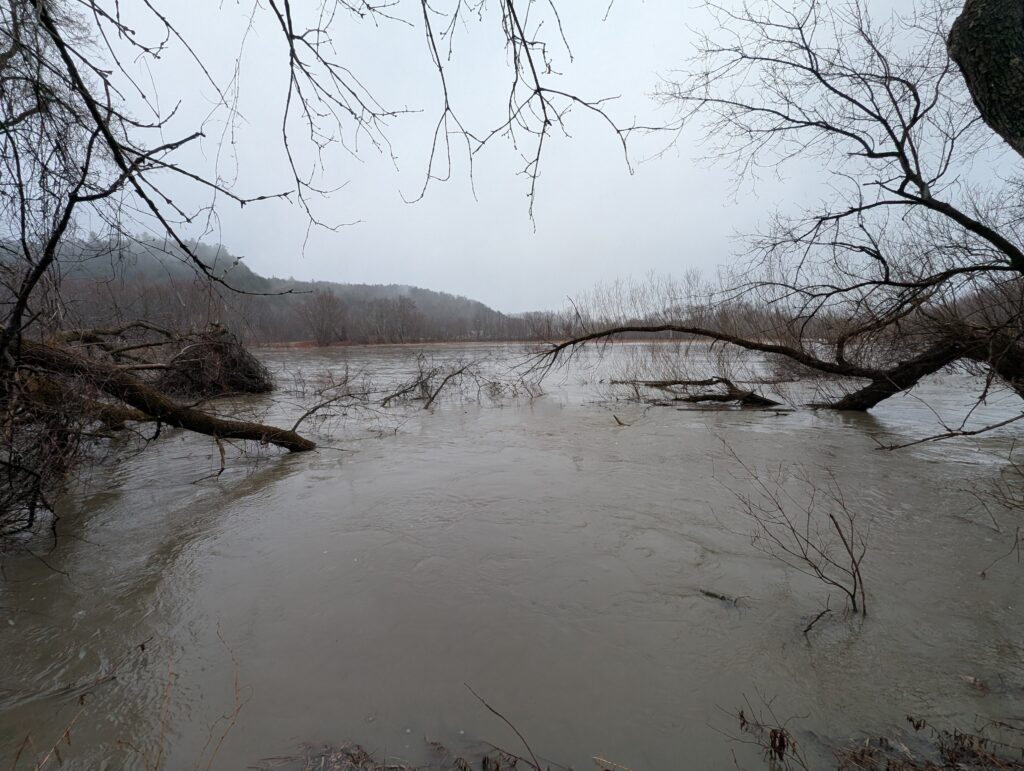
Lamoille River flooding after heavy rain event
Heavy rainfall dramatically changes conditions in rivers, streams, and swimming holes. High water levels, swift currents, submerged obstacles, and unstable riverbanks create hazardous conditions that can persist for several days after a storm. Even when water levels begin to recede, hidden dangers may remain. Floodwaters can sweep logs, sharp debris, and other hazardous materials downstream, creating risks that are not always visible from the shore.
Stormwater runoff carries harmful pollutants into rivers, lakes, ponds, and streams, including disease-causing microorganisms, chemicals, and excess nutrients. Flooding can also trigger sewer overflows that release untreated sewage into waterways, while fuel, oil, pesticides, and other contaminants may be washed into rivers during heavy rain events. Excess nutrients can fuel cyanobacteria (blue-green algae) blooms in the days and weeks following a storm. Swimming in contaminated water can cause skin rashes, sore throats, diarrhea, and, in some cases, more serious illnesses.
Public health officials recommend waiting at least 48 hours after significant rainfall before swimming in rivers and streams. If flooding has occurred, it may take even longer for conditions to become safe. If your favorite swimming spot is still affected by a recent storm, you can use Vermont River Conservancy’s interactive map of conserved river access areas to find another place to enjoy the water.
According to the Vermont Department of Health, an average of eight people die each year in bodies of water across the state. Vermonters die each year from unintentional drowning. Checking the weather forecast and observing river conditions before recreating near water can help play a lifesaving role.
Before heading out for a summer swim, always check the weather, observe water levels and currents, and prioritize safety.
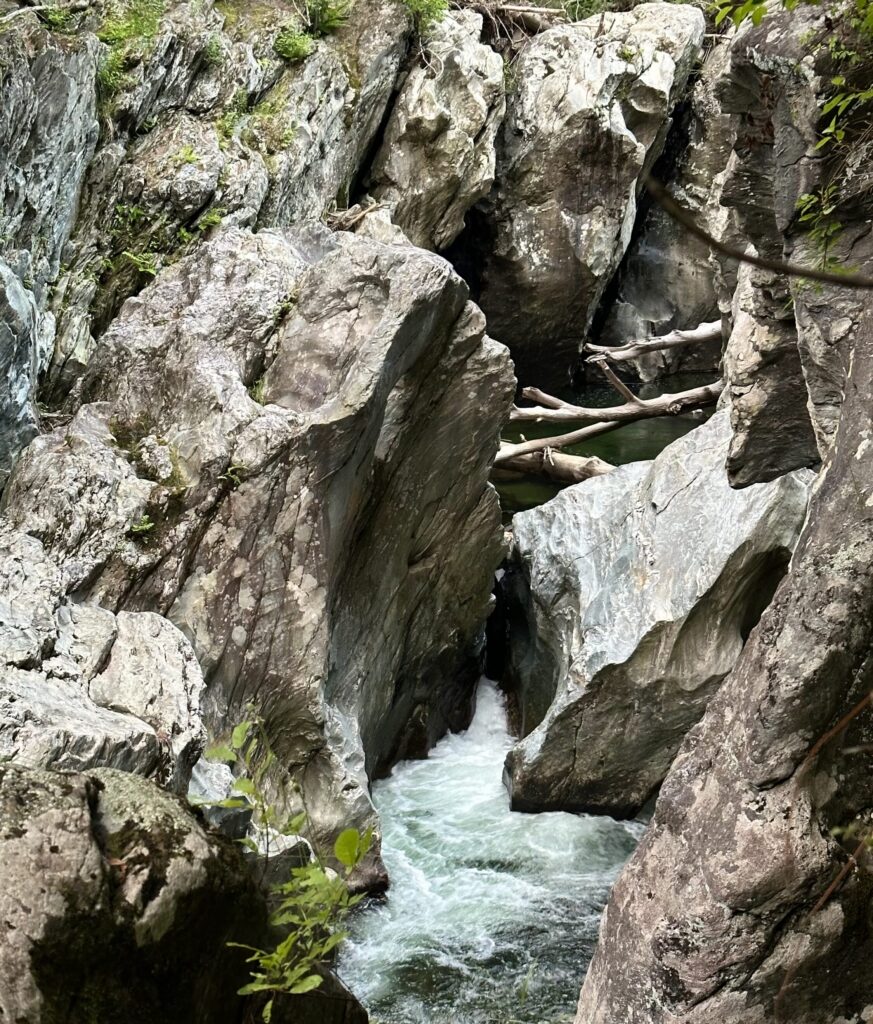
Huntington Gorge waterfall
If you see foam, go home. When the surface of swimming holes look foamy or frothy, DO NOT go in. White, foamy water often indicates turbulent, aerated water. Because aerated water contains millions of tiny air bubbles, it is less dense than normal water, making it impossible to float or swim. No person, even the strongest swimmer, can float in air filled/foamy water. These conditions are often accompanied by powerful currents that can quickly overwhelm even strong swimmers. When in doubt, stay out. Waiting at least 48 hours after a major rainstorm before swimming can help you avoid dangerous currents and contaminated water—it could save a life.
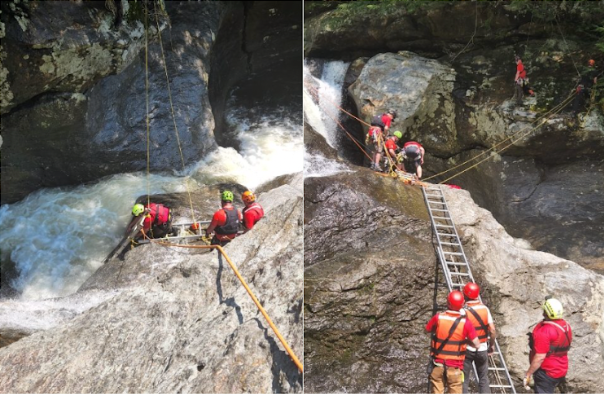
Emergency responders conduct a drowning rescue at the Bolton Potholes, where fast-moving, aerated water creates deadly swimming conditions.
WCAX recently featured an article, How to Stay Safe While Enjoying Vermont’s Swimming Holes, highlighting essential river safety tips from Drew Clymer, Search and Rescue Coordinator for the Vermont Department of Public Safety. Clymer reminds swimmers that rivers are constantly changing as storms, floods, and seasonal flows reshape channels and move logs, rocks, and other debris.
"[They] are beautiful and they're wild, but they change all year long, so the swimming hole that you jumped in today may not be the same swimming hole that you jumped in last year."
— Drew Clymer, Vermont Department of Public Safety
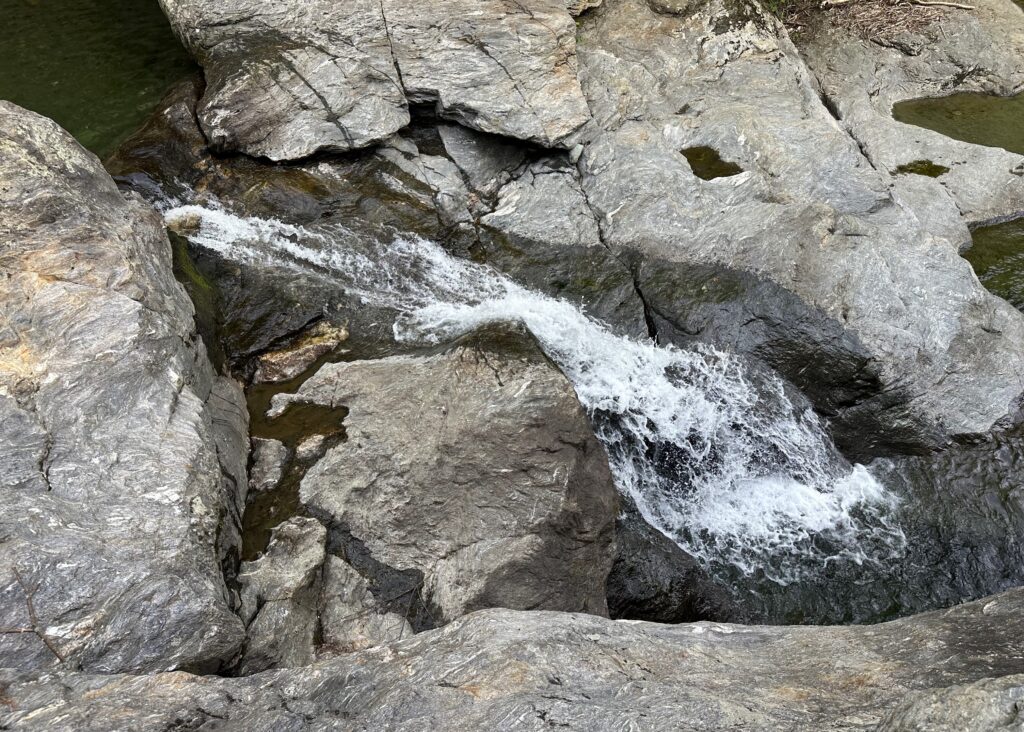
Bolton Potholes waterfall