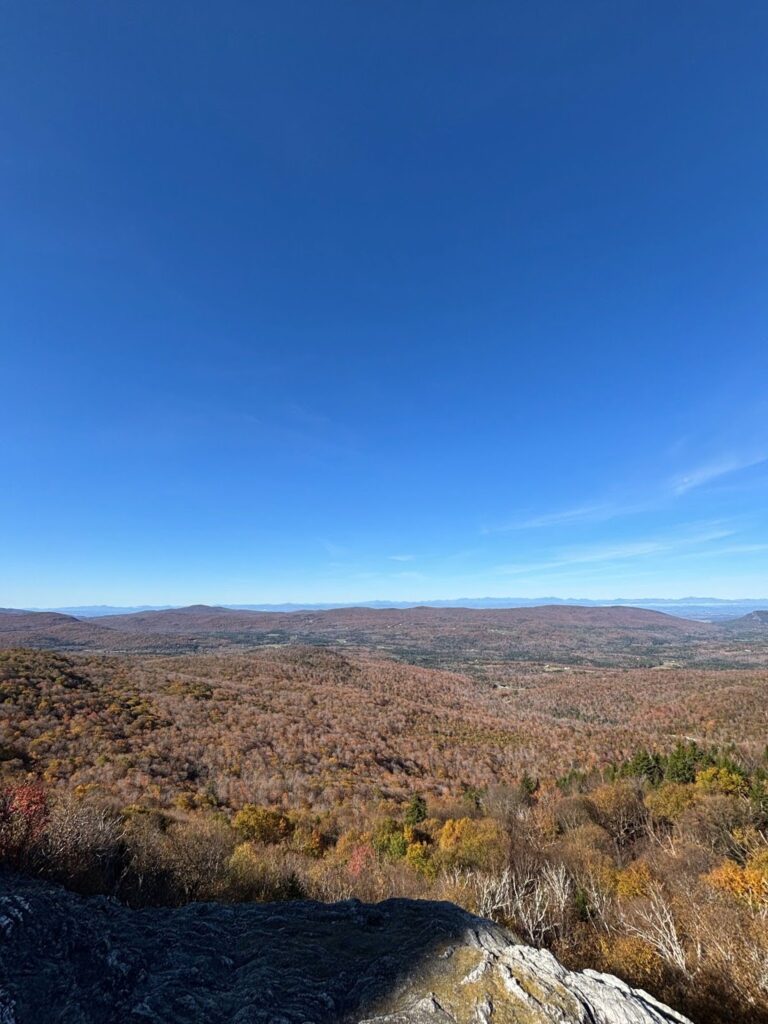
August 2025 was the driest August on record in Vermont since 1895. Currently, 100% of the state is experiencing drought conditions. Autumn, a time when our green mountains are fleetingly robed in crimson and gold, and locals and visitors alike can’t help but pause in awe of nature’s brilliant wonder. This year, the leaves are changing from green to fall colors more quickly than expected. Just as we lose hair from stress, the drought conditions this past fall stressed the trees, interfering with the production of deep red and purple pigments (anthocyanins), resulting in a less vibrant display. Lower soil moisture forces trees to enter a “survival mode,” causing them to shed their leaves. Trees conserve their energy demand and moisture by shedding, prioritizing their root health over foliage.
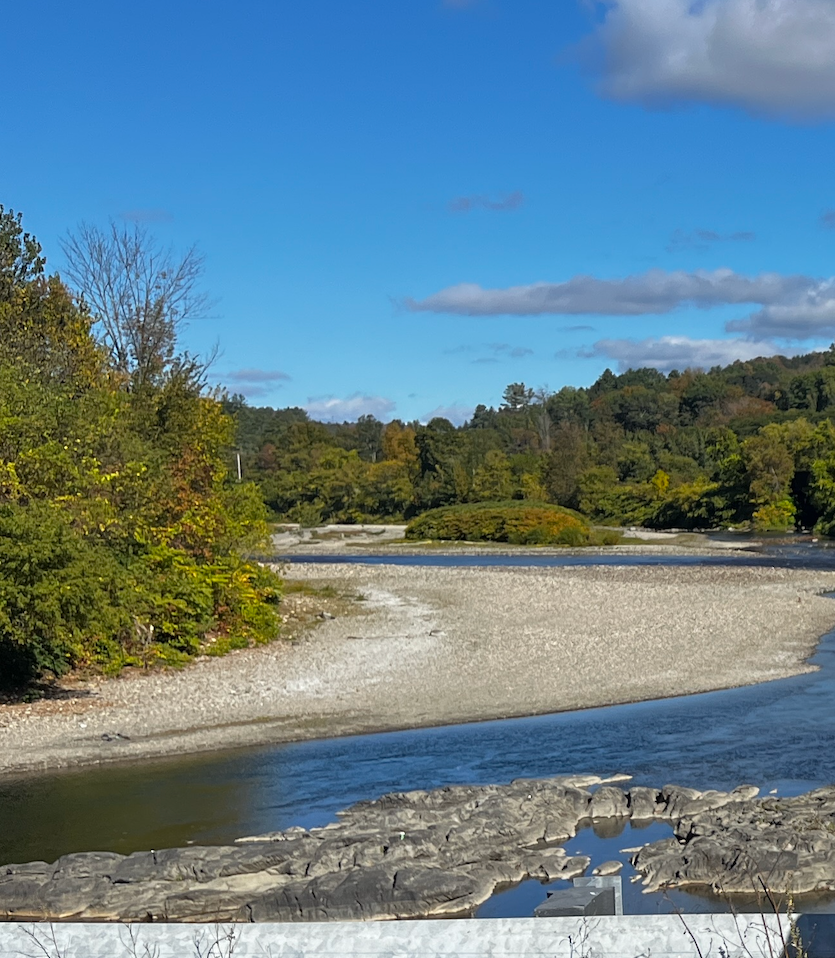
What happens to our rivers when there is a severe drought? During drought conditions, the current flow becomes slower, pollutants become concentrated, and higher water temperatures deteriorate the aquatic habitats. Fish and wildlife are very sensitive to water conditions. The absence of consistent water flows can eliminate important features like pools and riffles that fish and invertebrates use for shelter and spawning. Drier riverbeds can lead to concentrations of sediments and pollutants that can alter the balance of a healthy riparian ecosystem.
Since 2023, our communities have faced flood after flood…and now extreme drought. In the era of climate change, we can expect more of these pendulum swings from very high highs to very low lows. Through small actions like planting a seedling to large projects like restoring headwater forests, there’s one solution that helps with both ends of the pendulum: take care of our rivers. When we protect floodplains, wetlands, and old-growth headwater forests, we strengthen our trees’ abilities to sustain their beautiful foliage and allow rivers to recover bends and curves that can hold more water on the land. We create critical habitats for beavers to recharge groundwater in vibrant wetlands, enabling microorganisms to create healthy soil for all.
Here are a few things we can do to recover the lands we love during extreme drought conditions:
Planting trees to retain groundwater:
This past April, we planted more than 1,000 trees, each a little sprig of hope for our rivers. Their roots will hold riverbanks in place, and their trunks will slow floodwaters. The root system retains groundwater and shares the wealth with other plant life. Additionally, the root network strengthens soil health by distributing nutrients throughout the forest ecosystem. A huge thanks to the dozens of school kids, college students, and volunteers who got their hands dirty planting trees, rain or shine. Our rivers are healthier thanks to the community efforts in Northern Vermont.
More easements:
Easements will ensure that vital floodplain, wetland, and riparian ecosystems remain intact, allowing natural processes to unfold while offering long-term benefits for wildlife, water quality, and downstream communities. Drought mitigation through floodplain easements is crucial for recharging groundwater and enhancing water quality. When less water is available to dilute pollutants, floodplains serve as natural sponges to filter the water.
Protecting old-growth forest headwaters
The local hydrologic and water quality benefits of forested headwaters translate to healthier water and reduced flood risks downstream. Because forested headwaters absorb more precipitation than cleared or developed headwaters, they significantly reduce runoff, ultimately lowering flood intensities. The headwaters maintain dynamic equilibrium, stabilizing water quantity and quality for the entire river network even during drought conditions. Erosion occurs during drought, but because a forest floor’s microtopography, rooted vegetation, and organic soils work together to reduce soil erosion, they help guard against excess sediment loads, thus preventing the extreme scouring and down-cutting that we see in river systems with deforested headwaters.
Restoring Wetlands:
Protecting wetlands and beavers is crucial for water management because they act as natural filters, flood controllers, and reservoirs. Wetlands filter pollutants such as pesticides and nitrogen, and beavers create dams that slow water flow (during times of flooding), trap sediment, and store groundwater. This maintains waters at an ideal temperature for sensitive trout, creating a healthier and more stable water system that can withstand both floods and droughts. See the current wetland restoration projects Vermont River Conservancy is working on!