
North American Snapping Turtle (Chelydra serpentina)
The North American Snapping Turtle, one of the most common turtles in Vermont, have been spotted on dirt roads, side of busy roads, and bike paths all over Vermont this week, which happens to be Wild Turtle Week. The snapping turtle is grayish brown with no colorful markings, spots, or stripes, and has a long tail with a row of spines on top. They are the largest turtle species in Vermont, getting up to 18.5 inches in length.
These strongly toothed snappers are one of the seven species of turtles in Vermont. They’re amazing reptiles that have been around since the dinosaurs, over 200 million years ago. By keeping each individual turtle wild and helping them cross roads, you can help support the future generations of turtles.
Breaking News: Female Snapping Turtles are out ready to lay their eggs
Snapping turtles (Chelydra serpentina) are most often seen on land, basking or nesting under the sun. June is usually the best time of year to spot a snapping turtle–when females are headed on their egg-laying journey.
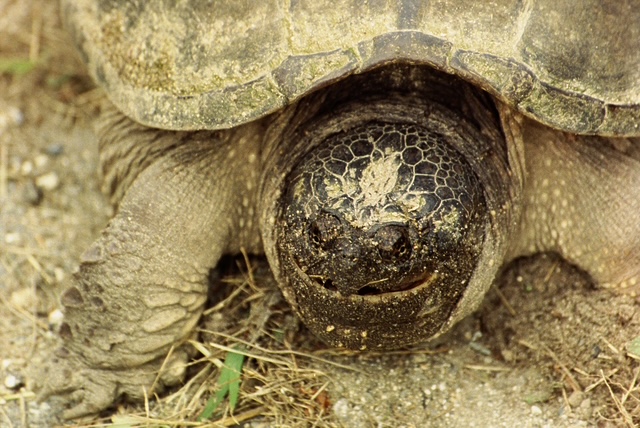
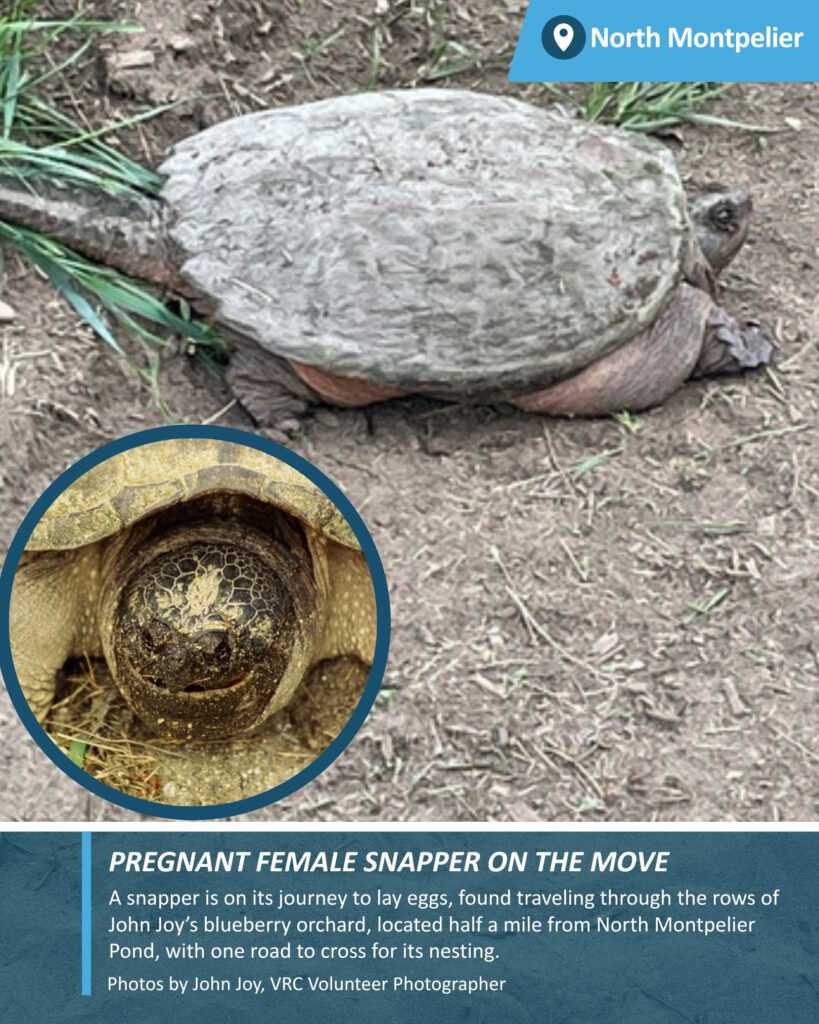
Pregnant snapping turtle traveling from North Montpelier pond photographed by John Joy
“Turtles grow slowly and live a long time, so losing a mature breeding female may be a huge loss to a turtle population.” Luke Groff, biologist for the Vermont Fish and Wildlife Department
Female snapping turtles are the turtle species traveling the farthest from waterways to lay eggs! They trek over a mile away from rivers, lakes, ponds, and wetlands to find the perfect egg-laying spot. Snapping turtles look for ground with minimal vegetation, direct sunlight, and sandy, loamy, and well-drained soil. This sometimes means turtles choosing an active driveway or parking lot… In this case, it is best to carefully move the female to a safer location in the same direction the turtle was going, as little as possible. Even if you think you know what’s best for the turtle, they know where they’re going.
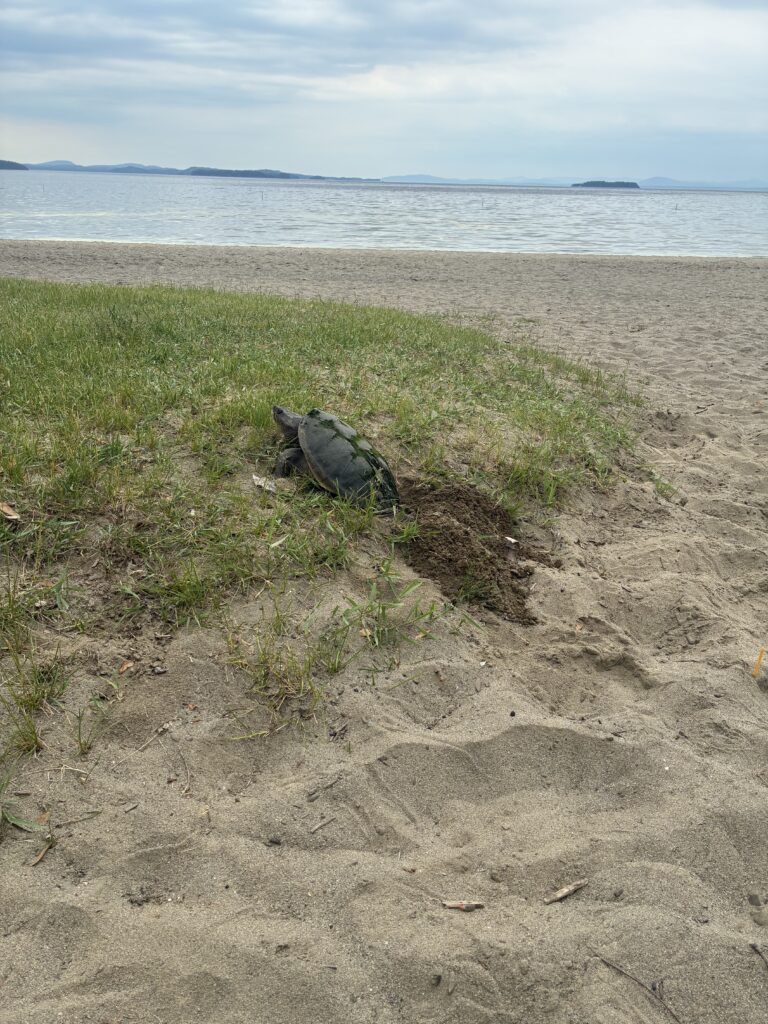
Snapper Handling Tips
Here’s how to look out for snapping turtles, help them cross the road, and stop them from nesting in dangerous grounds:
- Stay Alert: Always be cautious of the turtle’s bite. Snapping turtles have long necks that can extend up to the length of their shells in all directions.
- Pushing Method: Use a shovel or a long, sturdy object to gently guide the turtle across the road. This allows you to maintain a safe distance while assisting.
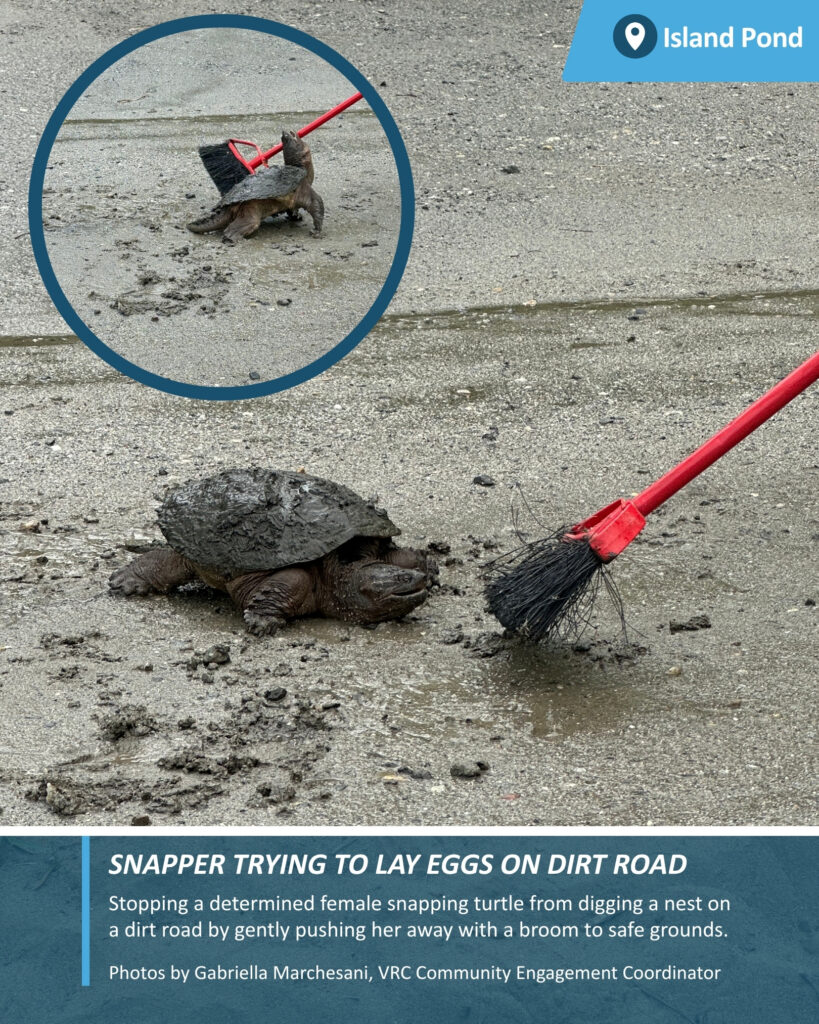
- Pulling Method: Place the turtle on a flat surface like a piece of cardboard or a car floor mat, and carefully pull it across to safety.
- Lifting Method: If the turtle isn’t moving with the above methods, approach it from behind. Keep your hands low and away from its head, wrapping them around the base of the hind legs. Ensure the turtle is facing up and away from you. For a detailed demonstration, watch this video by Vermont Herp Atlas.
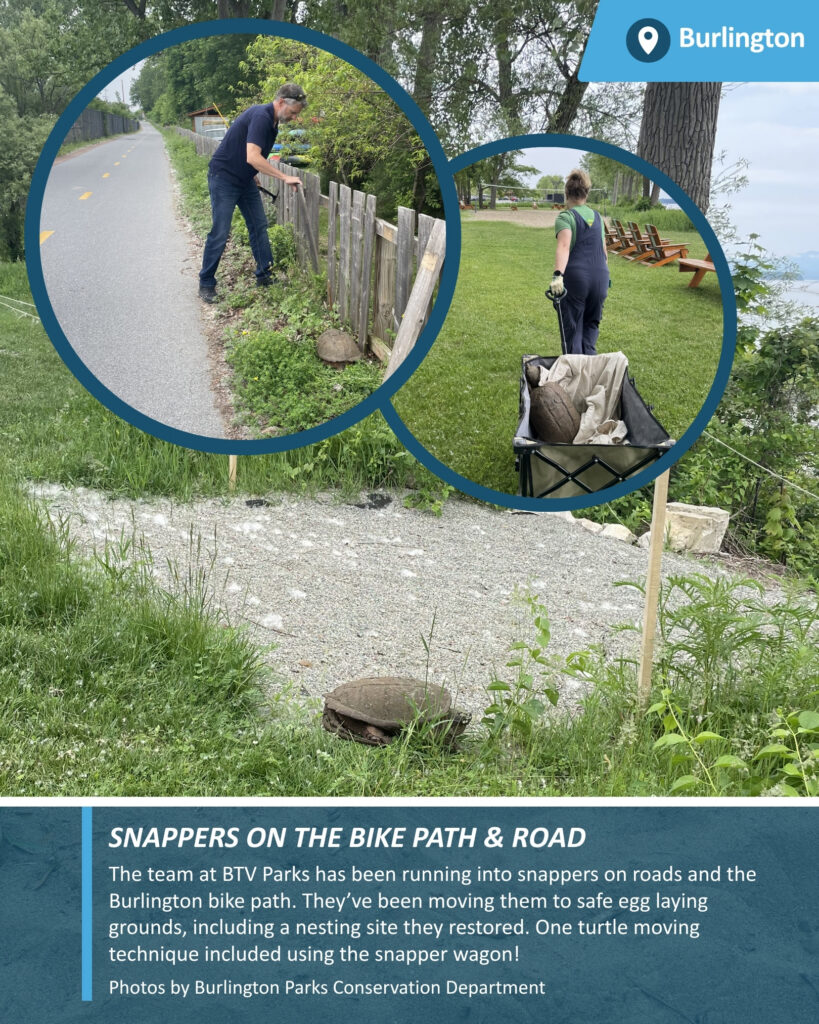
- Preventing Nesting in Dangerous Areas: To prevent a turtle from nesting in a hazardous spot, cover the area with a plank of wood or another object that blocks digging.
By following these tips, you can safely help snapping turtles without putting yourself at risk. Happy Wild Turtle Week and safe turtle crossing!