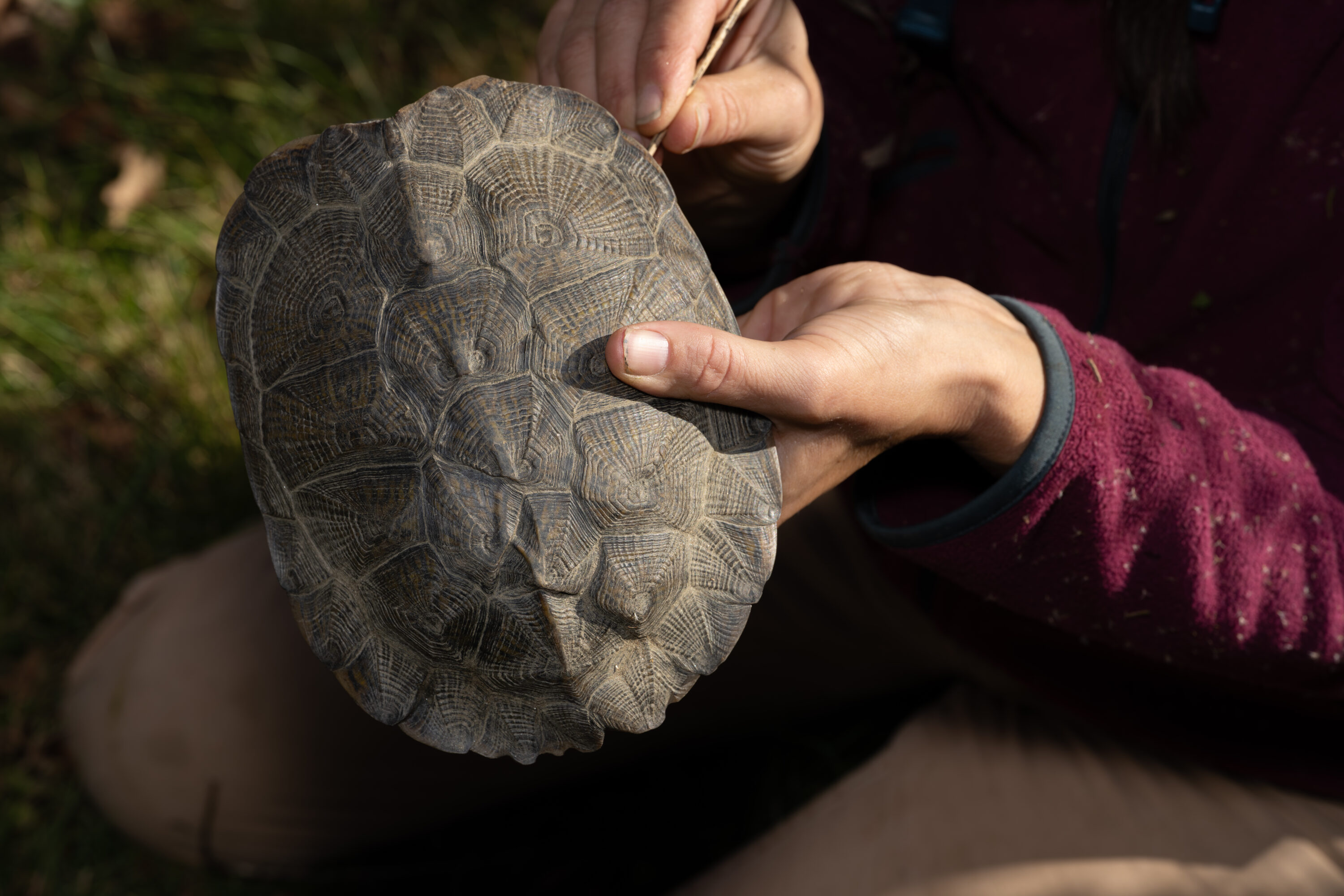
Vermont’s turtles are quiet survivors — ancient creatures that have thrived in our wetlands, ponds, and rivers for thousands of years. But today, these reptiles face growing challenges: habitat loss, road mortality, pollution, and the spread of invasive species that threaten the delicate ecosystems they depend on for laying eggs.
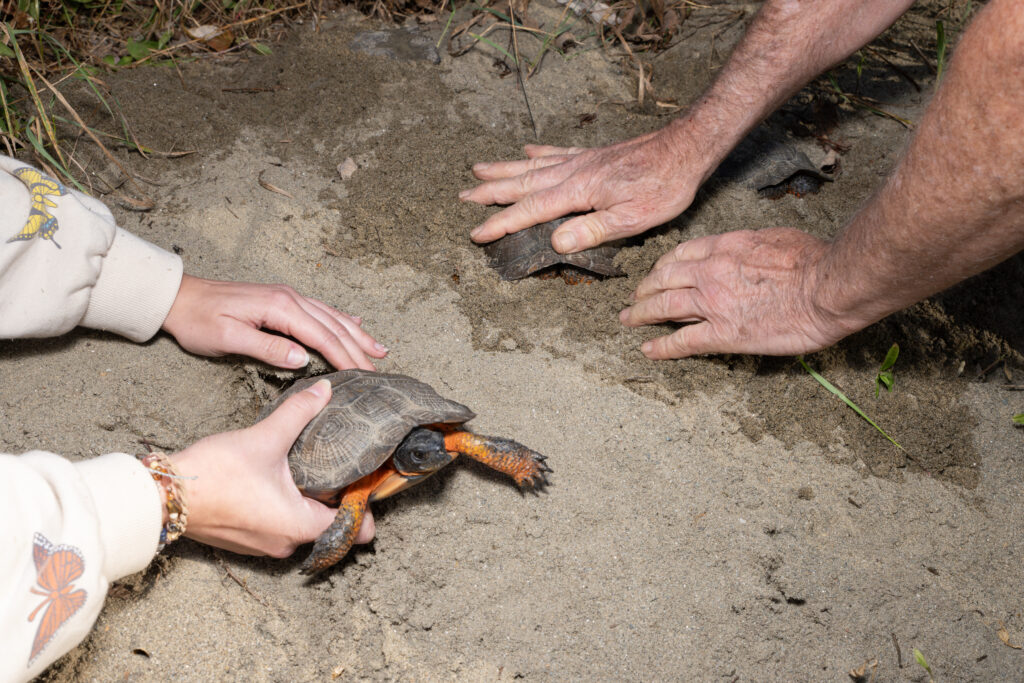
Wood turtles in the sand. PC: Emanuel Soza Foias
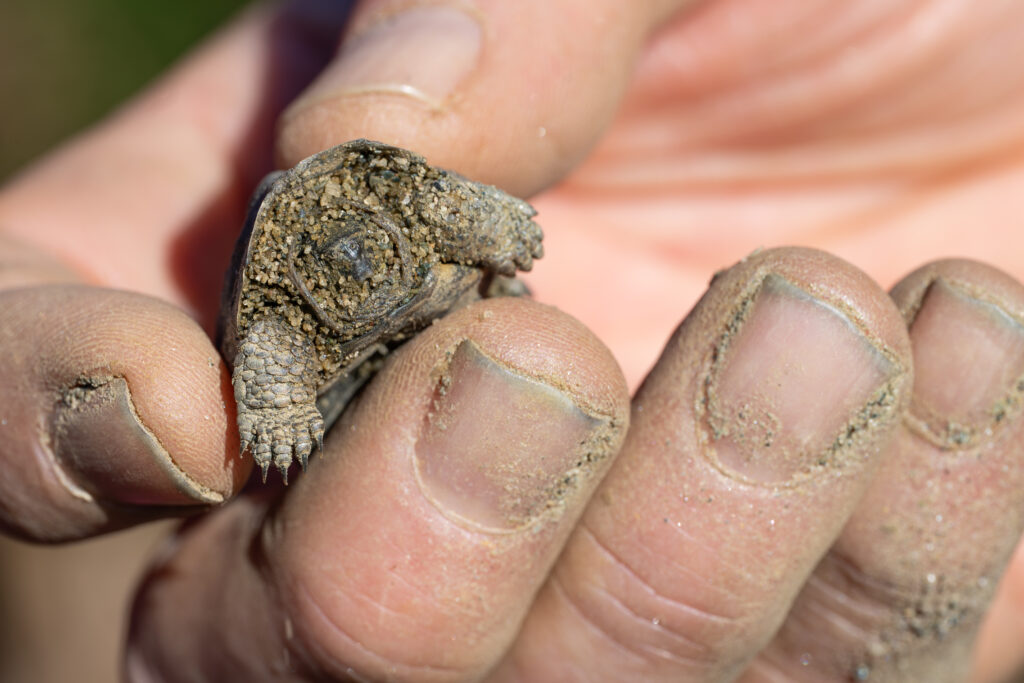
Freshly hatched Wood Turtle. PC: Emanuel Soza Foias.
To help protect these beloved residents of Vermont, we have joined forces with local conservation groups, biologists, interns and volunteers in an ambitious project aimed at managing invasive species and restoring natural habitats for Vermont’s turtles.
Vermont is home to seven native turtle species, including the common snapping turtle, painted turtle, wood turtle, and spotted turtle. Several of these species are listed as threatened or of special concern by the state. One of the biggest threats? Invasive plants. Species like common reed, japanese knotweed, purple loosestrife, and eurasian watermilfoil spread aggressively, choking out native vegetation and altering wetlands. These invasives can crowd nesting areas, change the structure of shorelines, and make it difficult for turtles to access the sunny, open spaces they need for basking and egg-laying.
The project consists of two main themes: managing invasives and restoring balance. It is an ongoing project with Amanda, Stewardship Manager and UVM interns each semester through an Environmental Stewardship course. The project focuses on invasive species management as a tool for turtle habitat restoration. The project combines scientific research and hands-on fieldwork. One of the key objectives of work the Intern and Amanda does is remove invasive species through manual pulling and habitat restoration techniques. Pictures included here are from a field work day in October when Vermont River Conservancy staff, UVM Intern Emily and Kylie from the Orianne Society got together to assess the turtle population at a site.
The work is far from over. Invasive species management requires long-term monitoring and commitment. But each restored shoreline brings Vermont one step closer to ensuring a future where turtles continue to thrive. Whether you’re a landowner, a volunteer, or simply someone who loves nature and turtles, you can make a difference. Together, we can keep Vermont’s wetlands vibrant and its turtles safe for generations to come.
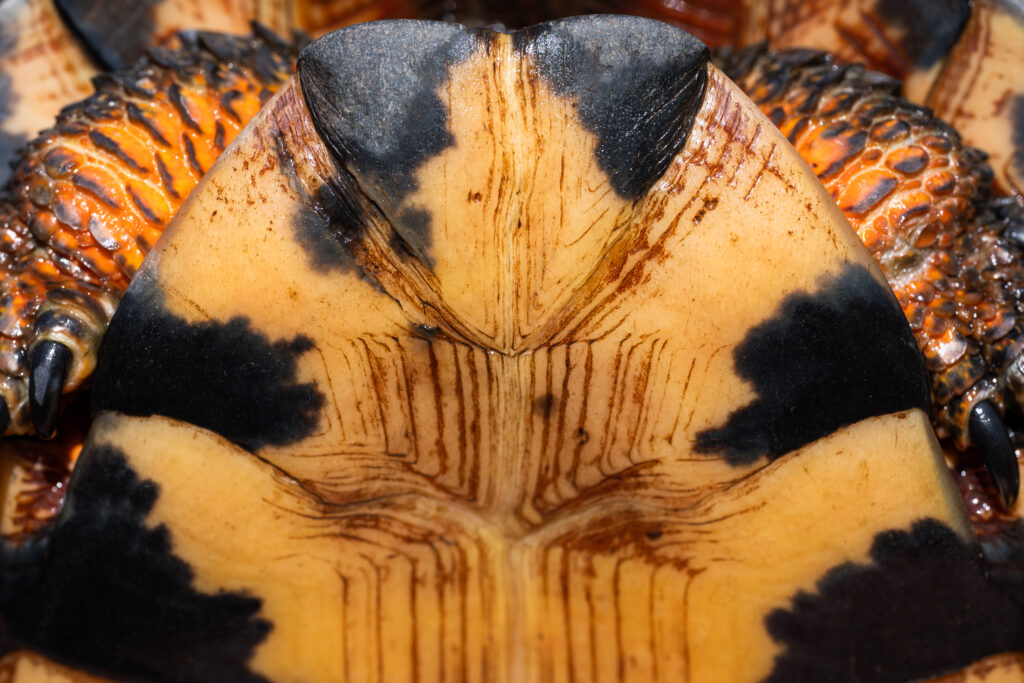
Underside of Wood Turtle. PC Emanuel Soza Foias.
How You Can Help
- Report turtle sightings and nests to Vermont Reptile & Amphibian Atlas.
- Learn to recognize and manage invasive plants on your property.
- Drive carefully in spring and summer when turtles are crossing roads.
- Support local conservation organizations working for Vermont’s wildlife.